
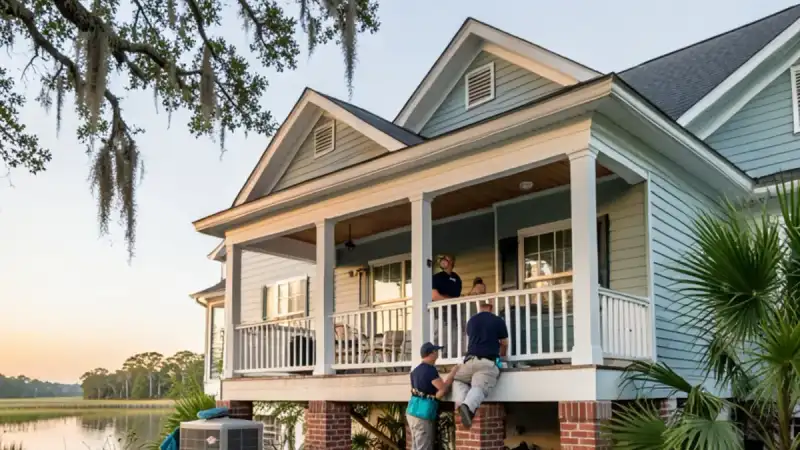
Charleston, SC HVAC Contractor for Heating and Cooling
Repairs, new systems and maintenance for homes and small businesses. Open 24 hours, with a clear, upfront quote before work begins.
- 4.9★ on Google (16 reviews)
- Open 24 hours, 7 days
- Clear, upfront quotes
HVAC contractor services in Charleston, SC
Aero Air Techs is an HVAC contractor in Charleston, SC. We repair, replace and maintain heating and cooling systems in homes and small businesses around the Lowcountry. Call at any hour, tell us what the system is doing, and we quote before work begins.
Start with the system giving you trouble. Most calls fall into one of three groups, and each one has a different first step.
- Something broke. HVAC repair starts with testing, because warm air or a cold furnace can come from several different parts.
- Something is getting old. If repairs keep coming, compare one more fix against AC replacement or a new heat pump before you spend the money.
- Nothing is wrong yet. A spring AC tune-up or a fall furnace check finds worn parts while they are still cheap to fix.
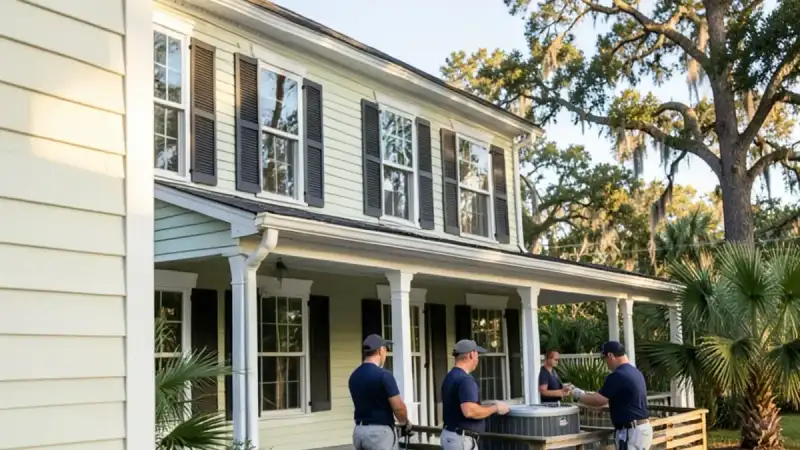
Air Conditioning
Repair, replacement, tune-ups and ductless cooling for Charleston homes and small businesses.
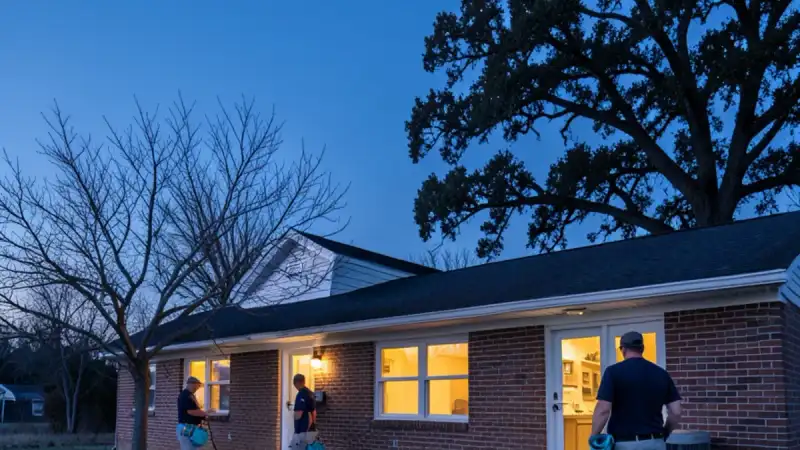
Heating
Furnace and heat pump repair, replacement and fall tune-ups for Charleston homes.
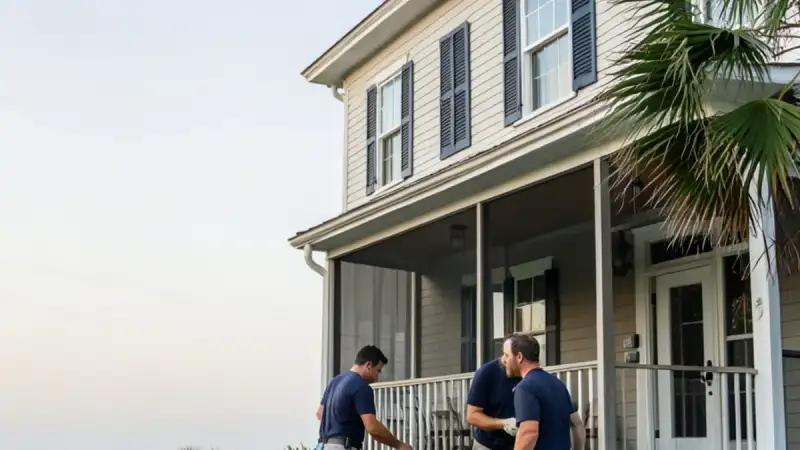
Indoor Air Quality
Humidity, ductwork, filtration and controls for Charleston homes, with realistic expectations.
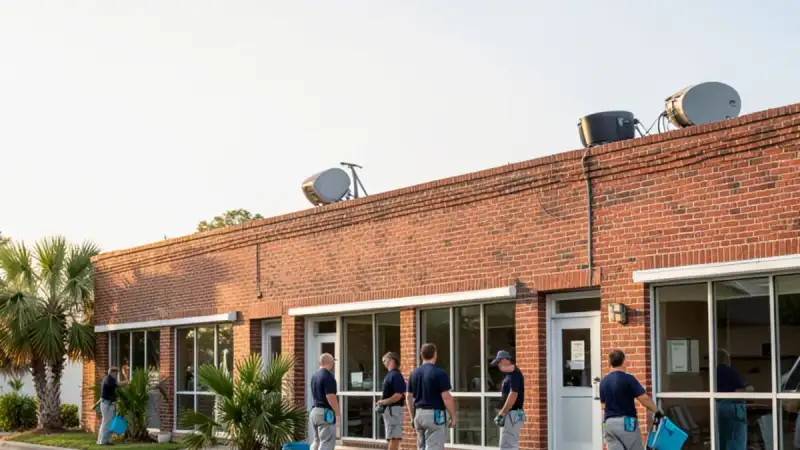
Commercial HVAC
Repair, rooftop service and planned upkeep for light commercial buildings around Charleston.
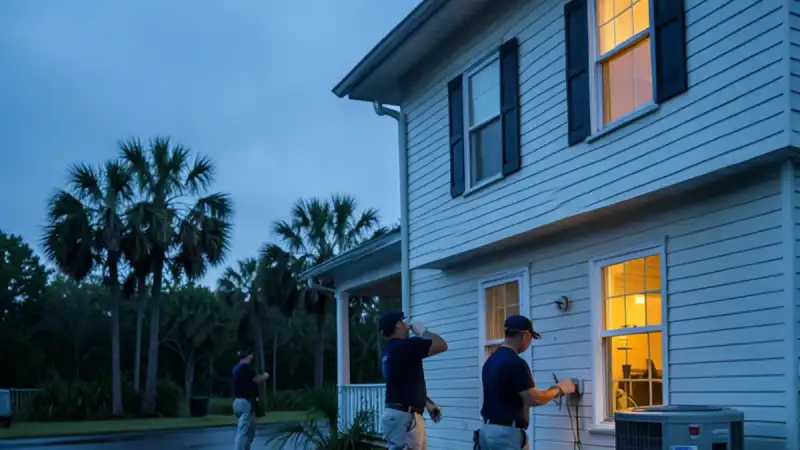
Emergency HVAC
Open 24 hours per Google. Call at any hour when heating or cooling fails.

Service Areas
Find your town or county and see how far it is from our base.
System down right now? We are open 24 hours, 7 days a week. Go straight to emergency HVAC service, or see what to do for emergency AC repair and emergency furnace repair.
Why people call Aero Air Techs
Six reasons, all of which you can check for yourself.
- 4.9 on Google. That is 4.9 out of 5 from 16 Google reviews, checked October 2026.
- Open 24 hours. Open 24 hours, 7 days a week, so you can reach us at any hour.
- A clear, upfront quote. We quote before work begins. Laverne S. summed it up: "price were as quoted."
- Plain explanations. Qween S. wrote that they "clearly explained the necessary work."
- Prompt arrivals. Victoria G. wrote, "They came out super quick and fixed my problem."
- Homes and small businesses. Tiffany F. wrote, "We will continue to use him at Abyssinia Baptist Church."
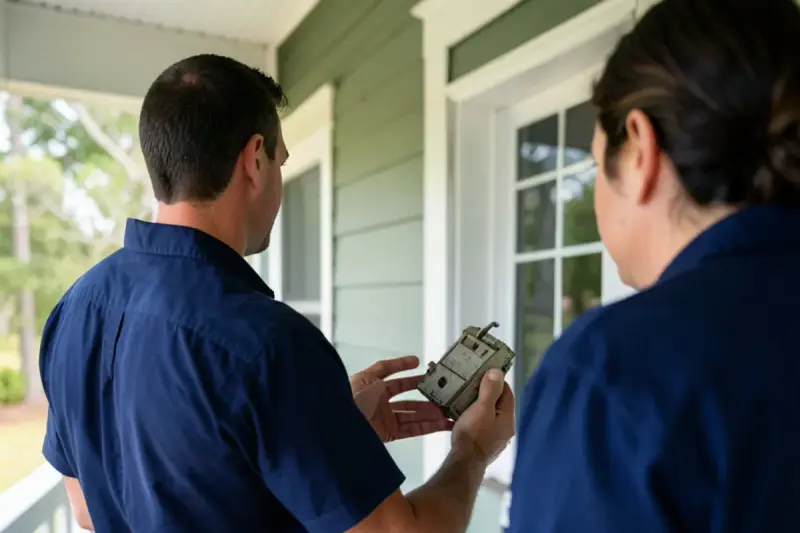
What to expect when we come out
- We listen. Tell us what the system has been doing and when it started.
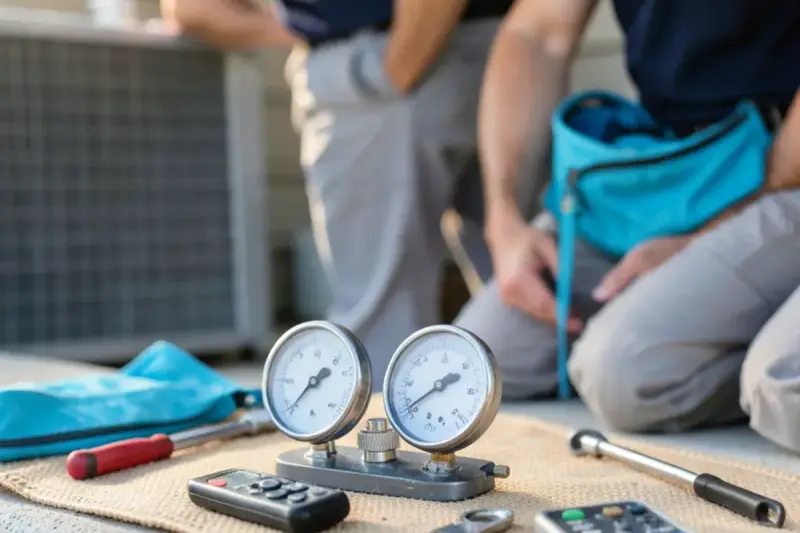
- We test. Meters and gauges point to the fault, so nobody has to guess at parts.
- We explain. You hear what failed and what your options are, in plain English.
- We quote. You get a clear, upfront quote before work begins.
- You decide. The work starts only after you say yes.
What does an HVAC contractor in Charleston, SC do?
Most HVAC services fall into four kinds of work: AC repair, AC and heat pump replacement, ductless and duct work, and maintenance. Each one has its own trigger, and knowing the trigger tells you who to call and how fast. As an HVAC company in Charleston, SC, we work on all four.
Here is where each job starts for a heating and air conditioning contractor.
| What you need | Where to start | What the work covers |
|---|---|---|
| Cooling back | AC repair in Charleston | Capacitors, contactors, condenser fan motors, refrigerant leaks and compressor faults |
| A new cooling system | AC replacement in Charleston, SC or central AC installation | Condenser, coil and often a new air handler, sized by a Manual J load calculation, the room-by-room math that fits the system to the house |
| One system for heat and cooling | Heat pump installation in Charleston | Heat pump replacement or a first install, a good fit for all-electric homes |
| Cooling without ducts | Mini split installation in Charleston | Additions, garages and a mini-split install for older peninsula homes with no duct space, often the first retrofit to price |
| Even airflow | Duct repair in Charleston | Ductwork repair and sealing for uneven rooms and musty vents |
| Fewer breakdowns | AC tune-up in Charleston | Coil rinse, capacitor and contactor check, condensate drain flush |
| Help right now | Emergency HVAC in Charleston | No cooling, no heat or anything that smells wrong, at any hour |
Charleston County applies the state-adopted International Mechanical Code to replacements as well as new systems.
Say it is a 90°F afternoon in West Ashley and the vents blow warm air. Keep the unit running on a bad capacitor and the compressor can overheat, which turns a small part into the most expensive repair on the system. Turn it off at the thermostat and call.
What is your HVAC system telling you?
Most problems announce themselves. Match what you see, hear or smell to the likely cause, then decide how fast to act.
| What you notice | Usual cause | What to do |
|---|---|---|
| Warm air from the vents | Low refrigerant or a failing compressor | Turn it off at the thermostat, then call |
| Outdoor unit humming, fan not spinning | Condenser fan motor or capacitor | Shut it down so the compressor does not overheat |
| Clicking when the outdoor unit tries to start | Contactor | Leave it off and call |
| Ice on the refrigerant line | Refrigerant or airflow problem | Turn it off and let it thaw before anyone restarts it |
| AC running nonstop in summer heat without cooling | Undersized or failing system | Check the filter, then book a look |
| Musty smell from the vents | Humidity in the ductwork | Have the ducts and drain checked this week |
| White or green crust on the condenser coil | Salt-air corrosion | Book a coil inspection before summer |
| Sudden spike in the electric bill | Inefficient, aging system | Compare the repair against a replacement |
An AC running nonstop without cooling points to an undersized or failing system, so ask about sizing as well as parts.
How does urgent AC repair work in Charleston?
Urgent repair works the same at any hour: you call, a technician tests the system, and you approve a quote before the repair starts. Google lists us as open 24 hours, 7 days a week. Arrival time depends on the day's calls and your address, so before anyone heads out, get the arrival estimate and the AC service call price, including any diagnostic fee.
Same-day AC repair in Charleston depends on those same two things. 24/7 HVAC service here means you can call at any hour. See emergency AC repair in Charleston or emergency HVAC in Charleston for heating faults.
What should you do when your AC dies on a 90°F day?
Set the thermostat to off first. Then work through this short list while help is on the way.
- Wait 5 minutes with the thermostat off, then check the breaker.
- If ice covers the refrigerant line, leave the system off and let it thaw, because running it frozen risks the compressor.
- Close the blinds, run fans and watch older family members and pets for signs of heat stress.
- Photograph the model and serial plates for warranty and rebate paperwork.
Do not keep resetting a breaker that trips. A repeat trip points to a shorted motor or compressor, and each reset stresses the windings further.
Run time is the reason. NOAA's 1991 to 2020 normals for Charleston International Airport list 64.3 days a year at or above 90°F, with 52.1 of them between June and August. NWS Charleston counted 71 such days in North Charleston in 2025.
How much does HVAC service cost in Charleston?
Homeowner Henry's 2026 Charleston guide, built from homeowner-reported quotes, puts a service call at $89 to $175 and full replacement jobs at $4,800 to $13,500. ConsumerAffairs' 2026 Charleston guide puts HVAC repairs at $150 to $600 and a full replacement at $5,000 to $12,000. HVAC Project Cost's 2026 guide estimates $8,000 to $12,000 for a 2,000 square foot Charleston home.
None of those figures are our prices. We quote each job before work begins, so use these ranges to judge any quote you get, including ours.
What common repairs run
AC repair cost depends on the failed part, and the AC service call cost comes first. These ranges are homeowner-reported Charleston quotes from Homeowner Henry, 2026.
| Repair | Reported range | What moves the price | Where it fits |
|---|---|---|---|
| Service call or diagnostic | $89 to $175 (reported) | Time of day, distance | Every no-cool call |
| Capacitor or contactor | $150 to $400 (reported) | Part, labor, condenser access | One failed part, no coil corrosion |
| Condenser fan motor replacement | $350 to $650 (reported) | Motor type, condition of the cabinet | A sound cabinet and coil |
| R-410A refrigerant recharge | $250 to $700 (reported) | Amount needed, leak location | Only with the leak found and fixed |
| AC compressor replacement | $1,300 to $2,800 (reported) | Compressor model, refrigerant, warranty status | Newer units |
Ask whether the service call is credited toward the repair. A recharge on a leaking system is a stopgap, because the refrigerant escapes again until someone fixes the leak.
What replacement and larger jobs run
These are Homeowner Henry's 2026 homeowner-reported quotes too, not contractor price lists, and a written local quote replaces them.
| Job | Reported range | What moves the price | Where it fits |
|---|---|---|---|
| 3-ton AC or condenser replacement | $4,800 to $7,800 (reported) | SEER2 tier, coil match, line set, permit | Homes with sound ductwork |
| Heat pump plus air handler | $7,500 to $13,500 (reported) | HSPF2 rating, air handler, duct changes | All-electric homes and furnace swaps |
| Single-zone mini split | $3,200 to $6,000 (reported) | Line length, indoor unit style, electrical | Older peninsula homes with no ducts |
| Duct repair or sealing | $450 to $2,200 (reported) | Run length, attic access, insulation | Uneven rooms or musty vents |
| Annual maintenance plan, two visits | $180 to $350 (reported) | What each visit includes | Homes near salt water, or anyone wanting fewer surprises |
How do you compare replacement quotes?
Get at least three written, line-itemed quotes and set them side by side. A quote that hides the equipment model or the permit line cannot be compared. Check each one for these six things.
- Equipment: brand, model number and SEER2 rating.
- Sizing: whether a Manual J load calculation sized the system.
- Pricing: labor, materials and a separate permit line.
- Warranty: parts and labor terms, in writing.
- Payment: milestones, not full prepayment.
- Credentials: license number, plus proof of bond and insurance.
A two-visit HVAC maintenance plan in Charleston puts one visit before cooling season and one before heating. Book the first before May, because breakdowns peak May to September, and ask what an annual maintenance plan includes, since a coil rinse and a drain flush matter more here than a filter swap.
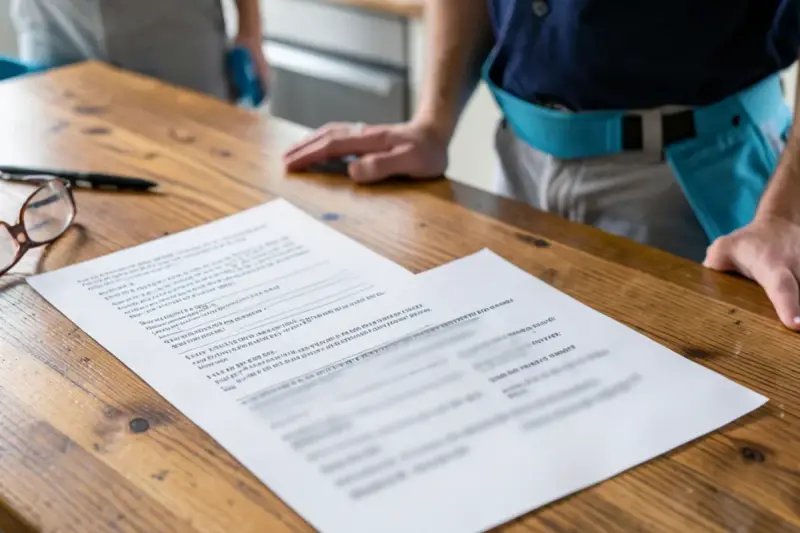
Should you repair or replace your AC in Charleston?
Repair a younger system with one failed part. Price a replacement when an older system needs a compressor. System age and repair cost settle most of these calls, so start by reading the manufacture date on the model plate.
| What you find | What it usually points to |
|---|---|
| One failed part on a clean, sound unit | Repair it |
| A compressor quote on an older system | Price a replacement beside the repair |
| A leaking coil on an older refrigerant | Get both options in writing |
| Corrosion across the coil and cabinet | Replace before paying for more parts |
| Rooms that never cool, whatever gets fixed | Check sizing and ducts before buying anything |
Read the manufacture date on the model plate, then put the repair quote next to the cost of a new system. A cheap part on a sound unit is a repair. A compressor quote on a corroded cabinet usually is not. A sudden jump in your electric bill is one more sign that an aging system is losing ground.
No single age decides it, so check your manufacturer's warranty terms before you choose. For a fuller walk-through, read when an old AC is not worth fixing.
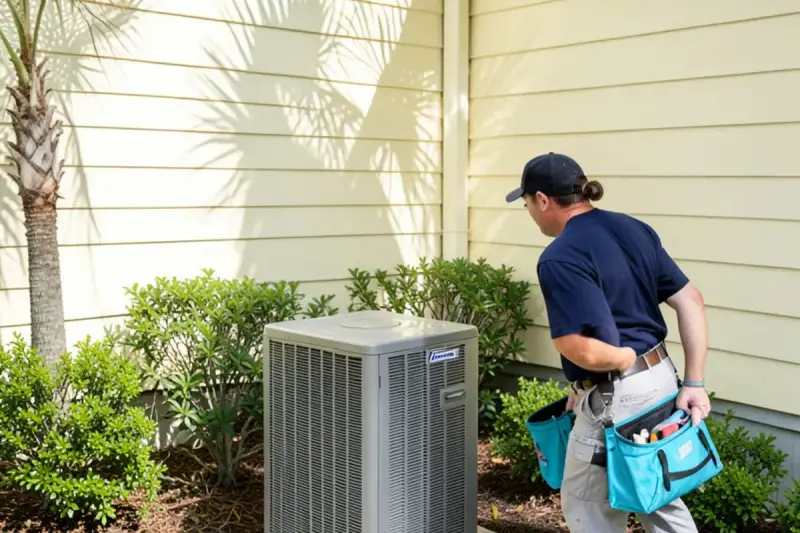
What SEER2 rating does a new AC need?
The SEER2 minimum rating depends on the size of the system. SEER2 is the efficiency rating on the 2023 test scale, and a higher number means less power for the same cooling. Under the Department of Energy's (DOE) 2023 standards for the Southeast, the part of DOE's southern region that includes South Carolina, split ACs under 45,000 BTU/h need at least 14.3 SEER2. At or above 45,000 BTU/h the minimum is 13.8 SEER2. Split heat pumps need 14.3 SEER2 and 7.5 HSPF2, the heating efficiency rating.
A 14 SEER label does not meet that bar. SEER and SEER2 use different tests, so the two numbers are not interchangeable.
Refrigerant has changed too. EPA's Technology Transitions rule moved new residential ACs and heat pumps off R-410A toward lower-GWP refrigerants such as R-454B and R-32 from January 1, 2025. Existing R-410A systems can keep running and be serviced.
What does a replacement look like from quote to final inspection?
The HVAC replacement process and inspection run in this order.
- Photograph the existing model plate, serial plate and installation.
- Get a Manual J load calculation and a line-itemed quote.
- Confirm who handles the permit, and which inspections apply.
- Install the equipment and test the system.
- Close out any final inspection, then file the rebate paperwork.
Which rebates and credits still apply?
- Federal credit. The federal credit is gone for new installs. Section 25C, which allowed up to $2,000 for heat pumps, does not apply to property placed in service after December 31, 2025 (26 U.S.C. 25C(i)).
- Dominion Energy South Carolina. Dominion Energy South Carolina offers rebates on ENERGY STAR equipment in existing homes. EnergyWise Shop and aggregators reported $400 to $500 for an AC or heat pump, $650 for an electric furnace to heat pump swap and up to $300 for ductwork in 2026, so confirm on Dominion's page. The Dominion Energy HVAC rebate is also reported to start at a 15.2 SEER2 tier. The reported rules matter as much as the amounts: install before applying, DIY installs do not qualify, a licensed contractor must do the work, and applications are reported as due within 90 days with an invoice.
- Santee Cooper. For the Santee Cooper heat pump rebate, its EmpowerHome page lists $300 to $400 per system for split heat pumps, for its own customers, with installation by one of its Trade Allies. Confirm with Santee Cooper. Berkeley Electric Cooperative and Dominion both serve parts of this area, so check your bill to see who serves your address.
- HEAR and HOMES. The SC Energy Office describes the HEAR and HOMES rebates as still being set up, with a statewide launch targeted for 2026 and income limits applying. Check energy.sc.gov/rebates for the current status. See our guide to Dominion Energy HVAC rebates.
How does the HVAC permit process work in Charleston?
The rules belong to the jurisdiction, not to any contractor's website, so confirm them at the source. Inside city limits, that source is the City of Charleston Permit Center at 2 George Street, Ground Floor, Charleston, SC 29401, (843) 577-5550. North Charleston, Mount Pleasant, Summerville and Charleston County each handle their own permits, so check with the office for your address.
An HVAC permit in Charleston is a mechanical trade permit, and the HVAC permit and inspection steps below follow the City's form.
Who handles the permit, and what does it cost?
Ask every bidder who pulls the permit and whether it appears as a separate line on the quote. The City's mechanical trade permit application, Form 5.1, has a contractor section asking for the company's SC LLR license number and City of Charleston business license number, plus a line for the property's flood zone. That Charleston mechanical permit, Form 5.1, also lists the inspection types.
HVAC Project Cost (2026) estimates $150 to $250 plus a $40 application fee for a typical Charleston replacement. That is a pricing guide's estimate and not a City fee schedule, so confirm current fees with the Permit Center.
Does swapping a condenser in the same spot need a permit?
Do not assume it is exempt. Form 5.1 lists a Change Out Condenser and/or Air Handler inspection. Outside sources conflict: some online guides call a same-size, same-location swap, known as replacement in kind, usually exempt, while HVAC Project Cost (2026) says a mechanical permit is required for any HVAC replacement in Charleston.
Call the Permit Center at (843) 577-5550 before anyone starts work.
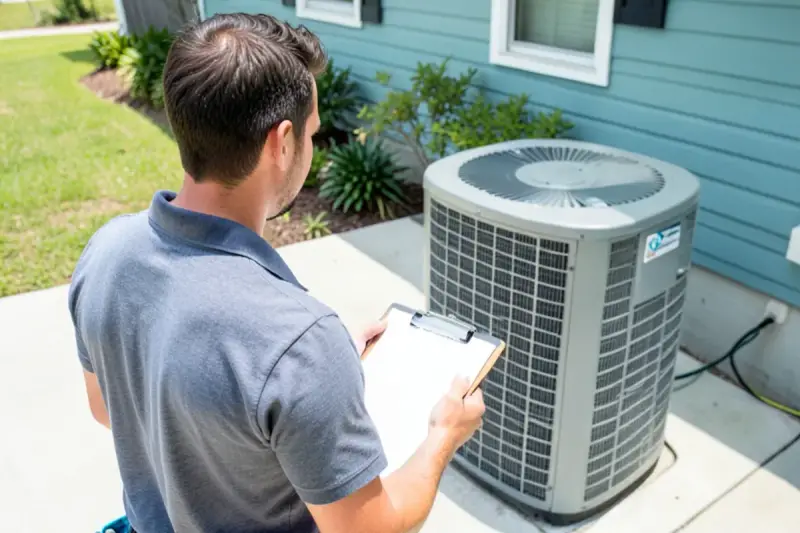
What inspections does the form list?
Form 5.1 lists rough-in, Change Out Condenser and/or Air Handler, air duct changeout and sealing, test and balance, and final inspections. Ask the Permit Center which apply to your job, and keep the final inspection record with your equipment paperwork.
How do you check an HVAC contractor's license in South Carolina?
Use the state's own lookup. The SC Department of Labor, Licensing and Regulation (LLR) oversees contractors, through the SC Residential Builders Commission for residential work and the Contractor's Licensing Board for commercial mechanical work. Anyone can search the LLR license lookup, and the steps are the same for any contractor you are considering.
Next Insurance and similar guides describe the credential as a Residential Specialty HVAC license, with a trade exam and a bond. Published bond amounts and job-size thresholds conflict, so confirm them with the Commission.
What proof should you ask for besides a license?
Reviews are the other check. Read recent ones for specifics, such as whether the price matched the quote and whether anyone explained the work. Ask to see recent local jobs, and get warranty terms in writing.
Four steps confirm a licensed HVAC contractor in Charleston.
- Ask for the license number and the exact license type.
- Search the number on the LLR lookup.
- Match the name, license type and expiration date to the company on your quote.
- Ask for current proof of bond and insurance.
A number that comes back under a different company or a different trade is a reason to stop and ask questions.
How do salt air and storm season change HVAC care here?
Heating and cooling in Charleston, SC follows the seasons, so the calendar here sets the work.
- March to May: Book the AC tune-up before summer and change the filter. A weak capacitor shows up fast once the system runs all day.
- June to August: Peak run time wears capacitors, contactors and motors, so report small changes early.
- June to November: Hurricane AC preparation starts with knowing your breaker and your shutdown plan.
- Winter: Mild, with occasional freezes. Check the heat before you need it, since a furnace or heat pump may sit idle for months.
Humidity keeps condensate drains busy and can leave a house sticky even with the AC running, which is where a whole home dehumidifier can help.
Near Charleston Harbor and on the barrier islands, salt film settles on the condenser coil and corrodes the fins and electrical contacts. Condenser coil salt-air corrosion in Charleston shows up as white or green crust on the fins. Salt-air AC coil protection has two parts: a coil rinse removes the film, and a protective coating can slow the damage. If you already see crust, read about coastal corrosion AC repair and salt-air AC protection in Charleston.
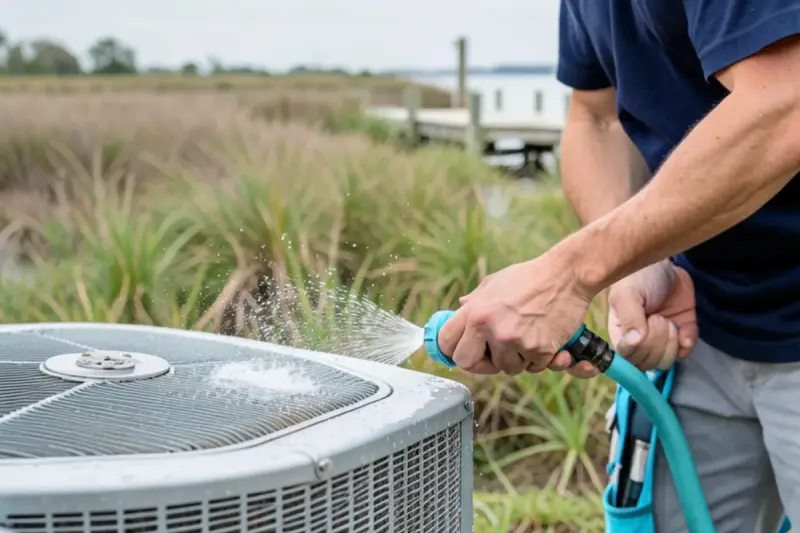
How do you prepare your AC for hurricane season in Charleston?
Make a shutdown plan in May, before the June to November season opens. A short checklist covers most of it.
- Find the breaker. Label the one that runs the system so anyone at home can reach it.
- Photograph the equipment. Get the model plate, serial plate and installation for claims and warranty paperwork.
- Ask about height. Ask about outdoor unit elevation in flood-prone Charleston areas such as the peninsula and James Island. An elevated outdoor unit keeps the contacts above floodwater, and flood risk depends on how low the unit sits.
- Shut down before the storm. Turn the system off at the breaker, because floodwater and surge ruin electrical contacts.
- Wait after flooding. Keep the breaker off until a professional has inspected the unit.
Our guide to hurricane prep for your AC unit goes further, and flood zones and elevated homes covers the height rules.
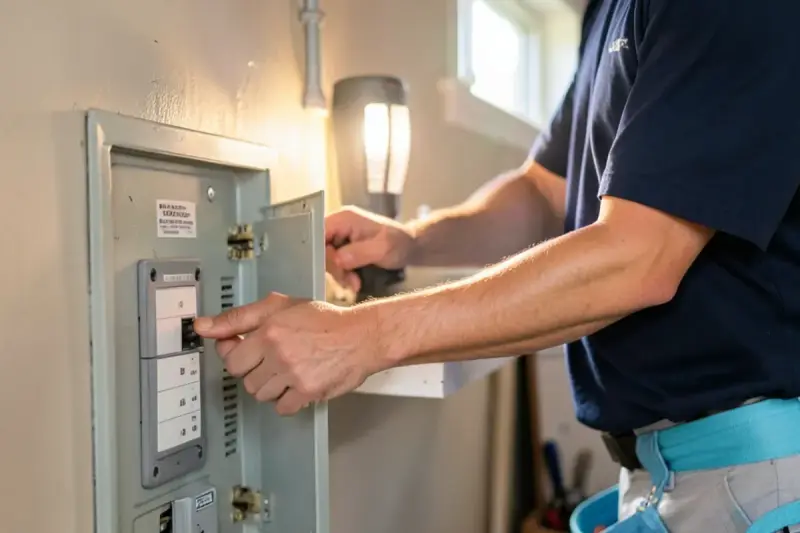
Flood rules set how high equipment must sit, and they differ by jurisdiction. Charleston County says replacement HVAC in A, AE, AH, AO and A99 zones must sit at or above the existing finished floor or the design flood elevation, whichever is lower, and two feet above base flood elevation if the job is a Substantial Improvement. City of Charleston guidance says machinery and equipment in the Special Flood Hazard Area must be elevated to the Design Flood Elevation, HVAC units and ductwork included, and the City has enforced Coastal A Zone requirements since January 1, 2023. Incorporated towns set their own rules, so ask the local floodplain office before moving a unit.
Where we work around Charleston
Closest to our Charleston base:
- North Charleston: postwar homes, new infill and plenty of commercial HVAC.
- Mount Pleasant: larger coastal homes, often with two systems.
- James Island: marsh-front homes where damp and corrosion wear on outdoor units.
- Johns Island: fast growth, with many new construction systems.
- Hanahan: suburban homes near the Cooper River.
- Folly Beach: elevated beach houses with heavy salt exposure.
- Sullivan's Island: oceanfront homes where coil protection counts most.
Further out, we also cover Goose Creek, Summerville, Ladson, the barrier islands and towns beyond, with longer trips arranged by phone. See every town and county, with drive times, on our service areas page.
Searching closer to home? Start with our pages for an HVAC contractor in North Charleston, an HVAC contractor in Mount Pleasant, an HVAC contractor in Summerville or AC repair on James Island.
Aero Air Techs Hvac · Charleston, SC · Open 24 hours, 7 days a week · Get directions
What customers wrote on Google
Reviews tell you more than we can. Read a few and look for what matters to you: whether someone showed up when they said, whether the work was explained, whether the price held.
“My experience with Aero Air Techs has been excellent! Cris was communicative, transparent, knowledgeable, and punctual. I couldn't recommend them enough!”
“We have used Rodriquez Washington and the company several times and he does an awesome job! He is honest and takes his time with us. We will continue to use him at Abyssinia Baptist Church.”
“They arrived promptly, clearly explained the necessary work, and completed everything efficiently. Extremely professional—I highly recommend them!”
“They came on time, explained everything that needed to be done and the work was done in a timely manner. Very professional and would definitely recommend them!”
“Great customer service and prompt arrival. Techs got job completed in a timely manner and prices were reasonable.”
“Pleasantly on-time. Professional individual service. Paid attention to detail. Highly recommend 👌 price were as quoted.”
4.9 out of 5 from 16 Google reviews (checked October 2026). Read more reviews · Leave a review
Who we are
Aero Air Techs is an HVAC company in Charleston, SC, and we strive to give every customer, everywhere, every time, great customer service and satisfaction. Based out of Charleston, we also service all of the surrounding areas. Are companies pricing to the roof? Don't worry, give us a call. Get to know how Aero Air Techs works.
Latest guides for homeowners
Plain answers on costs, breakdowns and Lowcountry weather, written for the moment you are deciding what to do next. Browse the full list on our HVAC guides page.
HVAC questions we hear in Charleston
What does Aero Air Techs work on?
We work on heating and cooling systems, including central AC, heat pumps, furnaces, mini splits, ductwork and indoor air quality equipment. That covers repair, replacement and maintenance. We also serve small businesses. Call and describe what your system is doing, and we will start from there.
Can I get same-day or 24/7 AC repair in Charleston?
You can call any hour, because Google lists us as open 24 hours, 7 days a week. Whether a technician arrives the same day depends on the day's calls and your address, so ask when you phone. We will give you a straight answer on when a technician can reach your address, in Charleston or nearby.
How much will my repair or new system cost?
That depends on the failed part, the system and how hard it is to reach, so we quote before work begins. If you want to judge a quote first, our Charleston HVAC cost section lists homeowner-reported ranges from third parties. Those are not our prices, and your clear, upfront quote will be specific to your home.
Why do AC units wear out faster near the harbor and on the islands?
Salt air settles on the condenser coil and corrodes the aluminum fins and electrical contacts. On Folly Beach, Sullivan's Island and homes along the harbor, the warning sign is white or green crust on the coil. A scheduled coil rinse removes the film before it eats through the fins, and a protective coating can slow the damage.
How early should I schedule an AC tune-up in Charleston?
Book the first visit before May, since breakdowns pile up from May through September. Homeowner Henry's 2026 homeowner-reported Charleston quotes put a two-visit plan at $180 to $350 a year, and those are not our prices. Whichever contractor you use, ask whether the visit covers a coil rinse, a capacitor and contactor check and a condensate drain flush.
Is it safe to restart my AC after a flood?
No. Keep the breaker off and have a professional inspect the unit before anyone restarts it. Floodwater can ruin electrical contacts and motors, and power on wet components can cause a short. Photograph any water line on the equipment first. On the peninsula and James Island, where flooding is a known risk, ask about raising the unit before the next storm.
Which AC suits an older Downtown Charleston home with no ductwork?
A ductless mini split is usually the first retrofit to price, since older peninsula homes often have no room for ducts. Homeowner Henry's 2026 homeowner-reported Charleston quotes put a single zone at $3,200 to $6,000, and those are not our prices. In a historic district, ask BAR staff before you move or add outdoor equipment.
Is a heat pump better than central AC for a Charleston home?
Often yes in an all-electric home, because one system both cools and heats through our mild winters. Homeowner Henry's 2026 homeowner-reported Charleston quotes put a heat pump with air handler at $7,500 to $13,500, not our prices. If a gas furnace still works well, central AC alone may cost less, so compare both options on paper.
Do you serve West Ashley, Daniel Island and the other areas around Charleston?
Yes. We are based in Charleston and serve the surrounding areas, including West Ashley, Daniel Island, North Charleston, Mount Pleasant and Summerville. Timing changes with distance and traffic across the bridges, so call with your address and we will tell you when a technician can get there.
What should I do if I smell gas near my furnace?
Leave the building first, and do not touch switches or try to find the leak. Once you are out, phone your gas utility or 911. When the utility says the house is safe, call us about the furnace. Our guide on smelling gas near a furnace goes through the steps.
Sources
- Homeowner Henry, Charleston HVAC guide (2026, homeowner-reported quotes)
- HVAC Project Cost, HVAC replacement cost in Charleston, SC (2026)
- City of Charleston, Mechanical Trade Permit Application, Form 5.1
- City of Charleston Permit Center
- U.S. Department of Energy, 2023 central air conditioner standards FAQ
- Dominion Energy South Carolina, heating and cooling rebates
- Santee Cooper, energy efficient heat pumps
- SC Energy Office, home energy rebates
- 26 U.S.C. 25C, Cornell Legal Information Institute
- National Weather Service, Charleston, SC
- NOAA, U.S. Climate Normals 1991-2020
- NOAA National Hurricane Center, tropical cyclone climatology
- Charleston County Building Inspection Services, flood plain
- ConsumerAffairs, HVAC companies in Charleston, SC (2026)
- City of Charleston, building construction in flood zones
- SC LLR license lookup
- Next Insurance, South Carolina HVAC license and insurance requirements
- U.S. EPA, Technology Transitions reconsideration fact sheet (September 2025)
Call or send a request
Aero Air Techs Hvac · Charleston, SC · (831) 461-3437 · Open 24 hours, 7 days a week · Serving Charleston and the surrounding areas
Phone is the quickest route. Have your address and the symptom ready, plus the system's age if you know it. If it can wait, send the form and we will follow up.
Request a quote
Calling is the fastest way to reach us: (831) 461-3437. If you would rather write it down, send the details here.