Repair or Replace: When an Old AC Is Not Worth Fixing
Small fault, sound system: repair it. Big fault on a tired system: price the replacement first. Age is one input, not the verdict.
- 4.9★ on Google (16 reviews)
- Open 24 hours, 7 days
- Clear, upfront quotes
By the Aero Air Techs team. Published October 30, 2026, updated October 31, 2026.
Repair or replace AC comes down to one question: is this fault a small problem on a sound system, or a big problem on a system that is wearing out? Fix the first. Get a replacement price before you fix the second.
Age matters, but it does not decide the question alone. We will not give you a firm cutoff, because published lifespans vary and we have no source that settles it for every home. What decides it is the failed part, the refrigerant, the condition of the indoor coil and how much you have already spent. The steps below walk through each one.
How do repair and replacement numbers compare?
Put both prices on one page before you decide. The ranges below come from Homeowner Henry's 2026 Charleston page, which describes them as general estimates from homeowner-reported quotes. They are third-party figures and not our prices.
| Job | Homeowner Henry, 2026 (not our prices) |
|---|---|
| Capacitor or contactor | $150 to $400 reported |
| Condenser fan motor | $350 to $650 reported |
| R-410A recharge | $250 to $700 reported |
| Compressor | $1,300 to $2,800 reported |
| 3-ton AC replacement | $4,800 to $7,800 reported |
| Heat pump with air handler | $7,500 to $13,500 reported |
Read the gap, not the exact numbers. The small electrical parts barely dent a new system's cost, so those repairs are usually easy calls. A compressor sits in a different class. On Homeowner Henry's reported ranges, one at the high end costs more than half the low-end price of a 3-ton replacement. That is where the decision gets real.
Repair or replace AC: signs that point each way
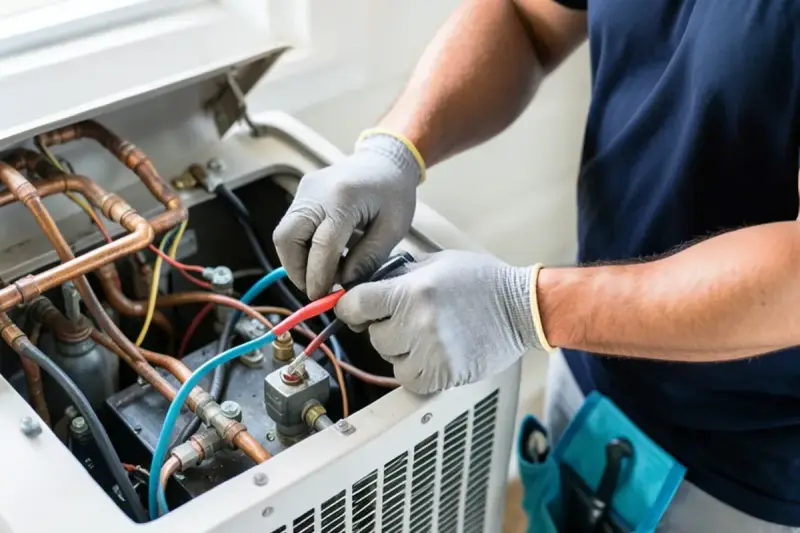
Most systems send clear signals when you look at them together.
| Lean toward repair | Lean toward replacement |
|---|---|
| Failed part is small and easy to confirm | Compressor or coil failed on an older system |
| First significant repair in years | Second or third big repair in a short stretch |
| Refrigerant is still serviced and the leak is fixable | Leak cannot be found, or keeps coming back |
| Cabinet and coils are in good shape | Rust, flattened fins or a crumbling base pan |
| Home cools evenly and bills look normal | Rooms stay hot and bills climb with no clear reason |
| Newer indoor coil and air handler | Original indoor parts that may not match new equipment |
One line on the right is rarely enough. Three or four usually are.
Why does the refrigerant change the answer?
Look at the data plate first. It tells you what the system runs on, and that can settle the question quickly.
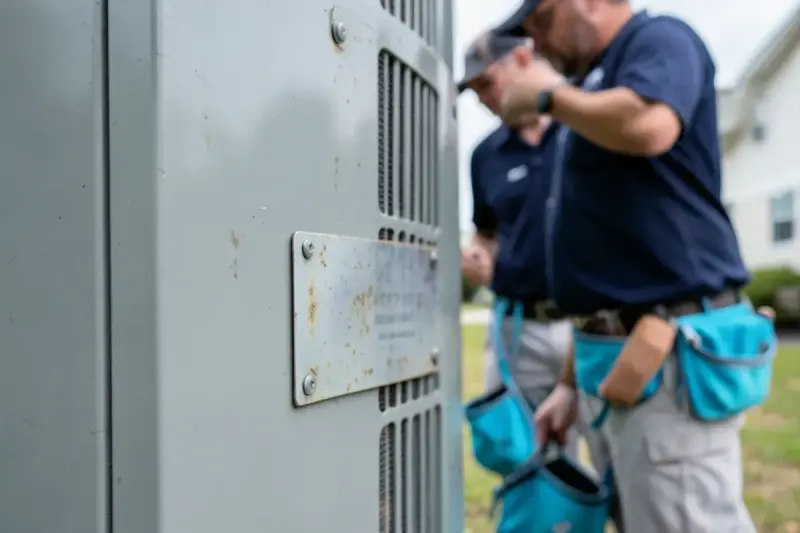
R-410A. EPA's Technology Transitions rule moved new residential ACs and heat pumps toward lower-GWP refrigerants such as R-454B and R-32 from January 1, 2025. Existing R-410A systems can keep running and can be serviced, so the change alone is no reason to replace a working unit.
R-22. Older systems may use it, and it is no longer produced or imported in the US. A leak on one of these systems is a much bigger decision than a leak on a newer one. Ask for the leak location and what the fix involves before anyone adds refrigerant.
What should a Goose Creek homeowner look at?
Look at run hours and the indoor side, because salt is rarely the main enemy this far from the beach. In Goose Creek, an AC earns its wear from long summers. NWS Charleston logged 71 days at or above 90°F in North Charleston in 2025, just down the road. All those hours land on the compressor, the capacitor and the blower.
Inland homes also hide problems that a new unit will not cure. Leaky or undersized ducts can make a good system feel like a bad one, so have them checked before you buy equipment to fix a comfort problem. A family home that has added a room or a finished bonus space since the system went in may also need a fresh load calculation. Manual J is the trade's room-by-room calculation of how much cooling a house actually needs.
A humid house deserves the same care. A system that is too large cools the air quickly, shuts off and leaves the moisture behind, so bigger is not the safe choice.
What should the replacement side of the quote show?
Ask for the replacement price in the same detail as the repair. Our AC replacement page goes deeper on matching a whole system, but these are the lines to look for:

- Outdoor unit, indoor coil and whether the air handler stays
- Line set, drain, disconnect and pad work
- Who handles the permit and the inspection
- Sizing method, with Manual J results if requested
- Efficiency rating in SEER2. In the Southeast, DOE requires 14.3 SEER2 for split ACs under 45,000 BTU/h and 13.8 SEER2 at or above it. SEER and SEER2 use different tests, so a 14 SEER label is not the same thing as 14.3 SEER2.
- Manufacturer warranty terms, which you should read yourself and register if required
Check rebates before you sign, but do not count on old advice. The federal 25C credit does not apply to property placed in service after December 31, 2025. Dominion Energy South Carolina has offered rebates on qualifying equipment, so confirm the current terms on Dominion's rebate page.
How do you run the numbers on your own system?
Put the decision on one page. You only need four figures, and most of them are on your quote or data plate.
- Write down the repair quote. Include everything needed to get the system running properly, not only the headline part.
- Write down the replacement quote. Use a real local quote, with the coil and any air handler included.
- Work out the percentage. Divide the repair by the replacement. Homeowner Henry's 2026 Charleston guide says repair usually makes sense when the estimate is under 30% of a new system's cost.
- Add the last two years of repairs. A third call in two summers changes the picture, even when each bill looks small.
That sum gives you a starting point. Then adjust it for the things a percentage cannot see, such as a salt-eaten coil, a planned move or a heat pump that has to work through winter too.
When should you repair even if the system is old?
Plenty of old units deserve one more fix. Replacing a system is a big step, and an honest quote may tell you to wait.
- The fault is small. A capacitor, a contactor or a clogged drain on a sound unit is a clear repair.
- You are moving soon. A cheap repair can carry you to the sale, as long as you disclose what you know.
- The coil and cabinet are clean. Equipment with little corrosion can keep running well past its average age.
- The house is about to change. If new windows, insulation or an addition are planned, size the new system after that work.
- You need time to compare. A low-cost repair in July buys you time to get proper quotes in a calmer month.
What should make you stop repairing?
Some signs say the money is better spent elsewhere. A compressor failure on an old system with a leaking coil is the clearest one. So is a burned-out compressor that has contaminated the lines, since that repair goes beyond the part itself.
Comfort counts too. If the system has never kept the house dry, and sizing or ducts are the reason, another repair only preserves the problem. Ask for a load calculation before you decide, and fix the sizing when you replace.
The advice we give at the condenser
Slow down and get the failed part confirmed. A dead capacitor can look like a dead compressor from the thermostat, and a panicked replacement is an expensive way to fix a small fault.
If it is a real failure on a tired system, ask two questions: what else is close to failing, and what would you do if this were your house? Then compare the repair against the replacement on paper. A cheap repair today that buys a season can be the right call if you need time to save, as long as you know what you are buying.
We work on both sides of this decision. On an AC repair visit we test the system and show you what failed, and we quote before work begins. One customer wrote that the "price were as quoted" and that is the standard to expect from anyone you call. Ask about any warranty terms when you call, and ask the same of every bidder.
Regular AC maintenance will not stop the clock, but it does give you a record to judge the next repair against.
Related questions
Is there an age where I should always replace an AC?
No, and be careful with anyone who gives you one. Published lifespan figures vary by source, and a system near the coast wears differently than one inland in Goose Creek. Age tells you how much to doubt the next repair. The failed part, the refrigerant, the coil condition and your repair history tell you what to do.
Should I repair a leaking R-410A system?
Often, yes, if the leak can be found and fixed. EPA says existing R-410A systems can keep running and be serviced, even though new residential systems have moved on to lower-GWP refrigerants. A repeat recharge with no leak repair is the thing to avoid. Ask what the leak test found before you pay for more refrigerant.
Is it okay to swap only the condenser?
Sometimes, but ask why before you agree. The indoor coil and outdoor unit are rated as a matched pair, and a new refrigerant may need a new coil anyway. A mismatch can cost you efficiency and may raise manufacturer warranty questions. Have the contractor show the matched rating and explain in writing what stays and what goes.