Ductless Mini Split Installation in Charleston, SC
No ducts, no room for ducts or one room that never cools? A mini split brings conditioned air to that space through a small wall opening.
- 4.9★ on Google (16 reviews)
- Open 24 hours, 7 days
- Clear, upfront quotes
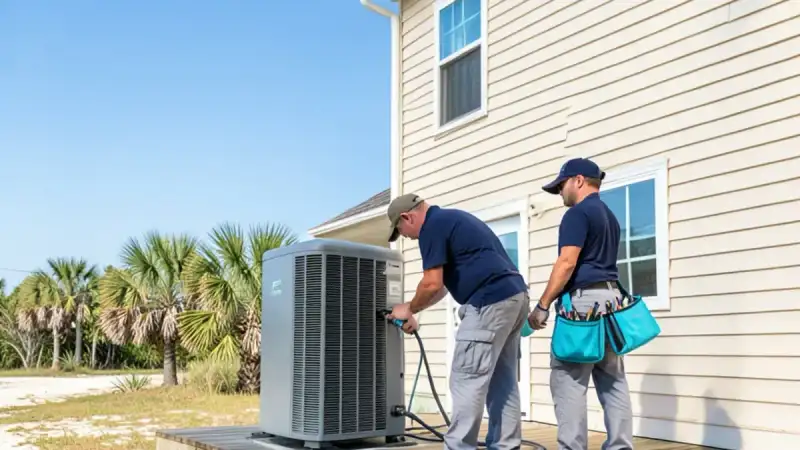
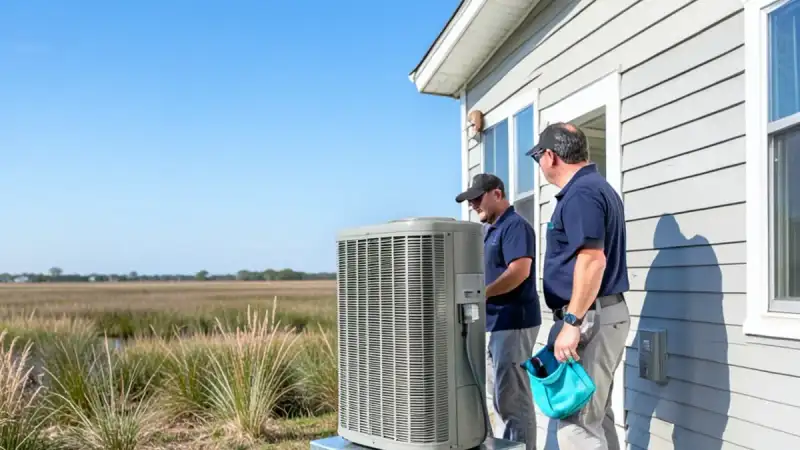
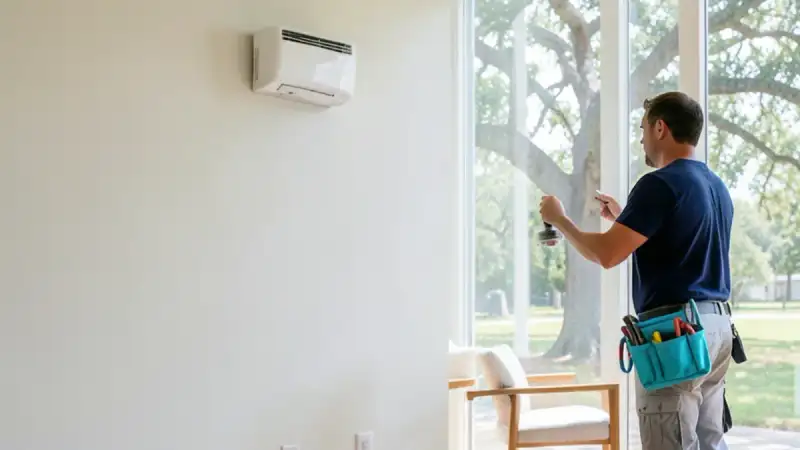
Ductless mini split installation in Charleston solves one problem well: getting conditioned air into a space with no ducts and no good way to add them. Aero Air Techs mounts an indoor head in each zone, connects it to an outdoor unit through a small wall opening and quotes the whole job before work begins.
Each indoor head has its own controls, so you can cool a room without running the whole house. The same system can also heat, which makes it a full-time answer for many additions.
Where does ductless AC beat extending the ducts?
Choose ductless when ducts would be long, leaky or impossible to hide. Extending central air is often the better fit when the existing system has spare capacity and a short, easy route. A load calculation tells you which side you are on.
Good candidates include:
- Room addition cooling. A sunroom or bedroom built onto a house often sits past the reach of the old ducts.
- Garages and workshops. The space stays separate from the house air, which keeps fumes and dust out of the main system.
- Bonus rooms over garages. These tend to run hot, and one head can even out the difference.
- Older homes without ducts. Thick walls and plaster ceilings leave few routes for sheet metal.
- Single rooms that never cool. A small head can cover the gap without replacing the main system.
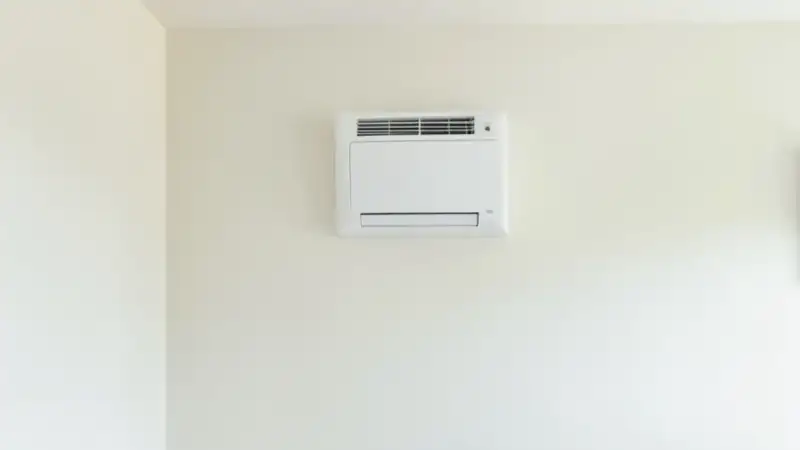
DOE notes that ductless systems avoid the energy lost in ductwork. They do put a visible unit in the room, so talk through the look of it first. Our mini split vs central air comparison lays out the trade-offs, and AC installation covers ducted systems.
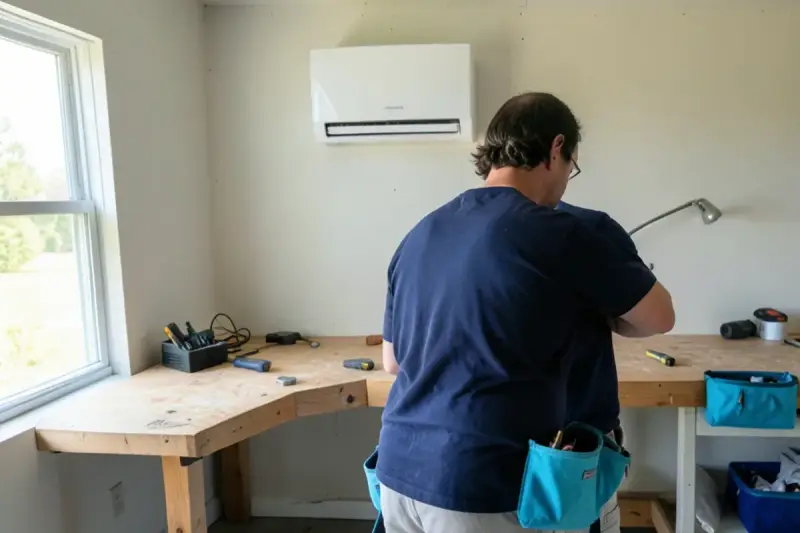
Ductless mini split installation in Charleston's historic homes
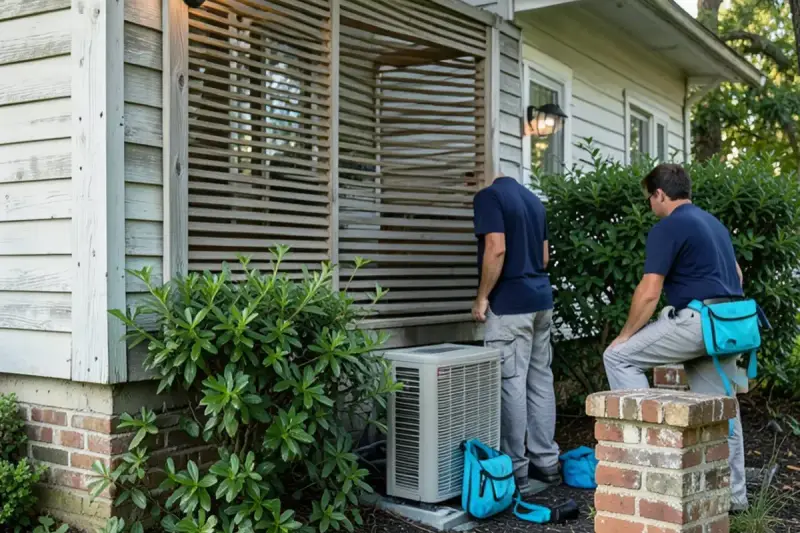
Historic work starts with one question: can the outdoor unit and the line set stay out of view? In the City of Charleston's historic districts, the Board of Architectural Review looks at exterior alterations visible from a public right-of-way. Its General Guidelines, published March 2024, say HVAC units must not be visible from the right-of-way, should be placed to the rear of the property and should be screened appropriately.
Those guidelines also say electrical meters and conduit should sit in an unobtrusive location and be painted to match the building. We apply the same logic to line set covers. Ask BAR staff before moving or adding outdoor equipment, and ask about your building's rating, because staff review of mechanical units has exceptions for the highest-rated structures.
Inside an old house, plan the route around the original fabric. Closets, chases and rear walls usually do less harm than cutting through plaster or trim. Read cooling a historic Charleston single house for how this plays out room by room.
Single zone or multi zone?
The number of closed-off rooms decides this more than square footage.
| Setup | Fits | Trade-off |
|---|---|---|
| Single zone | One addition, garage or problem room | Simple, but serves one space |
| Multi zone | Several rooms on one outdoor unit | Fewer outdoor units, but one failure affects every head |
| Several single zones | Rooms spread around the house | More outdoor units to place and screen |
Each head needs sizing for its own room. An oversized head reaches temperature fast and shuts down before it dries the air, which is a real problem in a Lowcountry summer. Head style matters too. Wall units are the most common, while ceiling cassettes and floor consoles suit rooms where a high wall is taken up by windows or trim.
For efficiency, DOE's 2023 standards require new split heat pumps in the Southeast to meet 14.3 SEER2 and 7.5 HSPF2. SEER2 rates seasonal cooling and HSPF2 rates seasonal heating. Check both numbers on the model you are quoted.
How we route the line set
The line set is two copper refrigerant lines, plus a power cable and a condensate drain. A good route is short, sloped and hidden.
- Straight through the wall behind the head is the simplest path.
- Down a closet or chase hides the lines and suits upper floors.
- In an outdoor cover painted to match the siding protects the insulation.
The drain needs a steady downhill fall, or a small condensate pump where gravity will not work. Manufacturers set limits on line length and vertical rise, so a far corner of the house may change the plan. On a raised home, a wall bracket or platform can help clear the flood elevation. City of Charleston guidance requires machinery in the Special Flood Hazard Area to be elevated to the Design Flood Elevation, and other towns set their own rules.
Request a quote
Calling is the fastest way to reach us: (831) 461-3437. If you would rather write it down, send the details here.
Install day, step by step
Most single-zone installs follow this order, and many finish in a day. Multi-zone jobs take longer.
- Site visit. We measure the room, pick head and outdoor locations and review any BAR or flood limits.
- Quote. You get a line-itemed quote before work begins.
- Mount. The indoor plate and the outdoor pad, bracket or stand go in.
- Bore and route. We drill the opening, run the lines and seal the penetration.
- Connect. Flare fittings are torqued to the manufacturer's spec and the power is wired.
- Test. We pressure test, pull a deep vacuum and release the charge. EPA Section 608 requires anyone who handles refrigerant to be certified.
- Show you the controls. You learn the remote, dry mode and how to clean the filter.
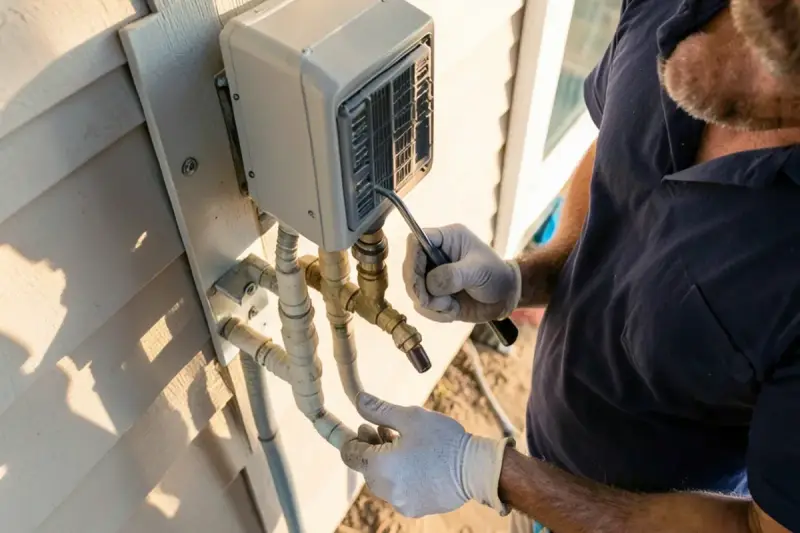
What changes a mini split quote?
Five things move the price most:
- Number of zones and the capacity of each head
- Head style, since cassettes take more work than wall units
- Line set length and how hard the route is to hide
- Wall type, especially masonry or historic material
- Electrical and mounting, including a new circuit, a bracket, a platform or a screen
Ask about rebates before you buy. Eligibility for ductless equipment varies by utility and program, so confirm the model qualifies first. Also ask each manufacturer what its warranty covers and how to register the system.
Filters, drains and mini split repair
Ductless systems need simple, regular care. Wash the filters on the schedule in your manual, keep the outdoor unit clear and have the indoor coil, blower wheel and drain checked during a yearly AC tune-up. Near salt water, rinse the outdoor coil as you would on a central system.
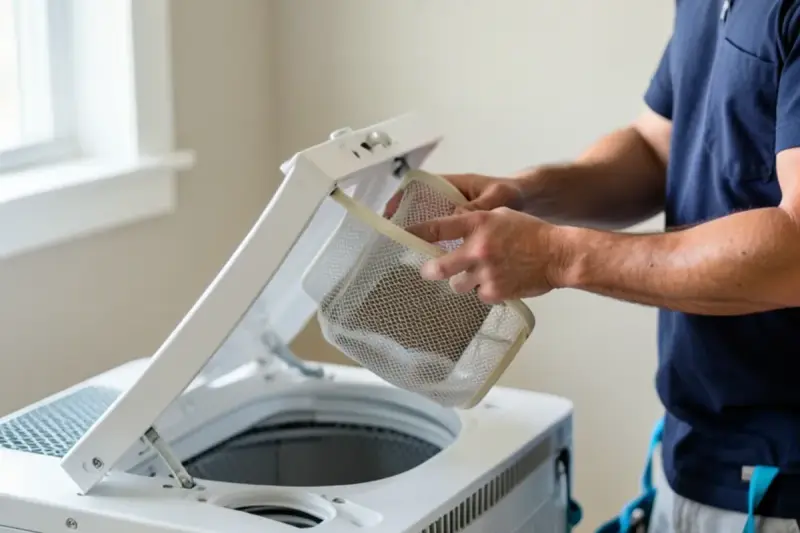
When something goes wrong, the usual suspects are weak airflow, water dripping from the head or a fault code on the display. Call with the model and the symptom, and we will talk through the next step.
Why call Aero Air Techs about ductless?
Here is what we can point to.
- 4.9 on Google, from 16 reviews as of October 2026.
- Quote first. We quote before work begins, so you can compare it with a ducted option.
- Clear explanations. One customer said they "clearly explained the necessary work."
- Careful pace. Another wrote that the technician "takes his time with us."
“They arrived promptly, clearly explained the necessary work, and completed everything efficiently. Extremely professional—I highly recommend them!”
“They came on time, explained everything that needed to be done and the work was done in a timely manner. Very professional and would definitely recommend them!”
“We called Cris and he came right over. He was knowledgeable about our unit and fixed it in a matter of minutes. His professionalism was top notch and we will be calling him for any AC issues moving forward. Highly recommended. I wish I could give more than 5 stars!”
4.9 out of 5 from 16 Google reviews (checked October 2026). Read more reviews · Leave a review
We are based in Charleston and serve the surrounding areas, including James Island, Seabrook Island and Walterboro. Seabrook and Walterboro are longer drives from our base, so call first so we can confirm a date. A ductless heat pump may also fit if you want heat and cooling from one system.
Where a mini split earns its place varies by town, and so do the outdoor rules.
- James Island: post-war homes on crawlspaces often have a porch or addition no duct reaches.
- Seabrook Island: villa regimes and the town's zoning permit come before any outdoor unit.
- Walterboro: the 127-acre historic district may need a Certificate of Appropriateness for visible equipment.
- North Charleston: Park Circle cottages from 1915 to 1945 suit a zone-by-zone retrofit.
- Mount Pleasant: a bonus room over a garage is a common reason to add one head.
- Sullivan's Island: the Town's design guidelines include a mechanical units chapter, so ask staff first.
- Summerville: older houses near the historic core may need architectural review for an outdoor unit.
- Folly Beach: the outdoor section still has to meet the four-foot freeboard rule.
- Georgetown: the 1729 street grid sits under the city's own review board, so plan the line set route early.
Questions about this service
Can a mini split cool a whole Charleston house?
It can in some smaller or open homes, but most multi-room houses need a head for each closed-off area. Bedrooms behind closed doors will not cool from a head in the hall. A load calculation for each room shows how many zones you need and whether central air would serve you better.
Do I need BAR approval for a mini split?
It depends on the property. In Charleston's historic districts, the Board of Architectural Review looks at exterior work visible from a public right-of-way, and its guidelines say HVAC units should sit at the rear and be screened. Ask BAR staff before moving or adding outdoor equipment, and do it before you sign.
Does a ductless heat pump work in our winters?
Yes, for most Charleston winters. A ductless heat pump runs in reverse and heats the room, and our occasional freezes fall well within what many models handle. Output can drop as temperatures fall, so check the manufacturer's capacity data if the mini split will be the only heat source in the space.
How big is the hole in the wall?
It is usually a few inches across, just wide enough for the line set, power cable and drain. We pick a spot behind the indoor head so the opening stays hidden, then seal it. On masonry or a historic wall, we talk through the location with you before anyone drills.
Do you handle mini split repair as well as installation?
Yes. Common calls involve weak airflow from dirty filters, a clogged drain dripping from the head, or a fault code on the display. Tell us the symptom and the model when you call. Some brands need parts ordered, so we will say if a return visit is likely.
Can the outdoor unit go on a wall bracket?
Often, yes. A bracket keeps a small unit clear of the ground and can help meet a flood elevation on a raised home. The wall has to carry the weight and vibration, and the bracket should resist corrosion near salt water. Check the manufacturer's clearances and your local flood rule first.
Sources
- City of Charleston, Board of Architectural Review General Guidelines, March 2024
- U.S. Department of Energy, Types of Air-to-Air Heat Pumps factsheet
- U.S. Department of Energy, 2023 central air conditioner standards FAQ
- City of Charleston, Building Construction in Flood Zones
- EPA, Section 608 of the Clean Air Act