What to Do When Your AC Stops Working in a Heat Wave
Run four safe checks, shut the system off if they fail, then put your attention on the people in the house. Here is the order we would follow.
- 4.9★ on Google (16 reviews)
- Open 24 hours, 7 days
- Clear, upfront quotes
By the Aero Air Techs team. Published October 30, 2026, updated October 31, 2026.
If your AC stopped working, what to do first is short: spend 15 minutes on four safe checks, then shut the system off and turn your attention to keeping people cool. Check the thermostat, the filter, the breakers and the outdoor unit.
If none of that brings cold air back, stop there. Running a failing system can turn a small repair into a large one.
Heat waves are when this happens most, because equipment gets no rest. NWS Charleston recorded 71 days at or above 90°F in North Charleston in 2025. It also logged 2,598 cooling degree days against a 2,434 normal, and that count is a running measure of how hard the weather pushes your AC.
AC stopped working? What to do in the first 15 minutes
Work through these in order. None of them requires tools or opening a panel.
- Set the thermostat. Choose Cool, leave the fan on Auto and set the temperature a few degrees below the room. A blank screen usually means dead batteries.
- Pull the filter. If you cannot see light through it, replace it. A clogged filter can starve the system of air and freeze the coil.
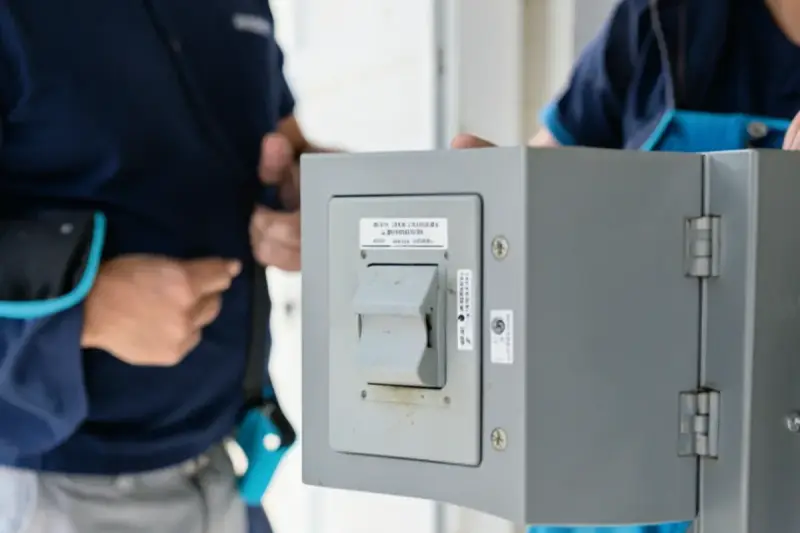
- Check two breakers. Most systems have one for the indoor air handler and one for the outdoor condenser. Reset a tripped breaker once. If it trips again, leave it off and call.
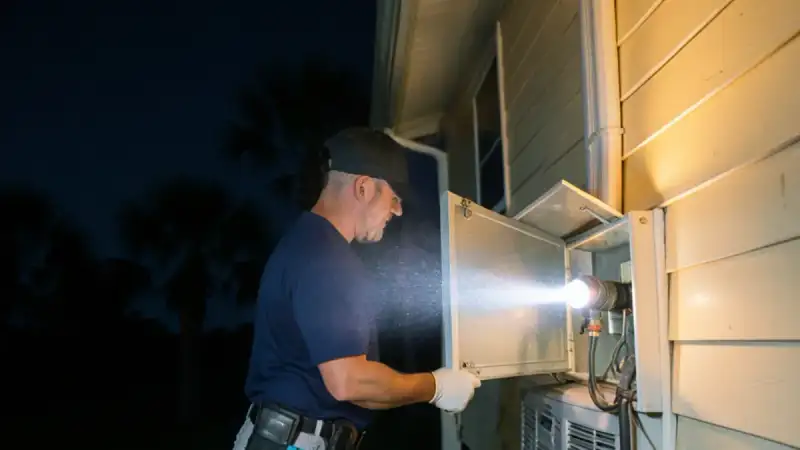
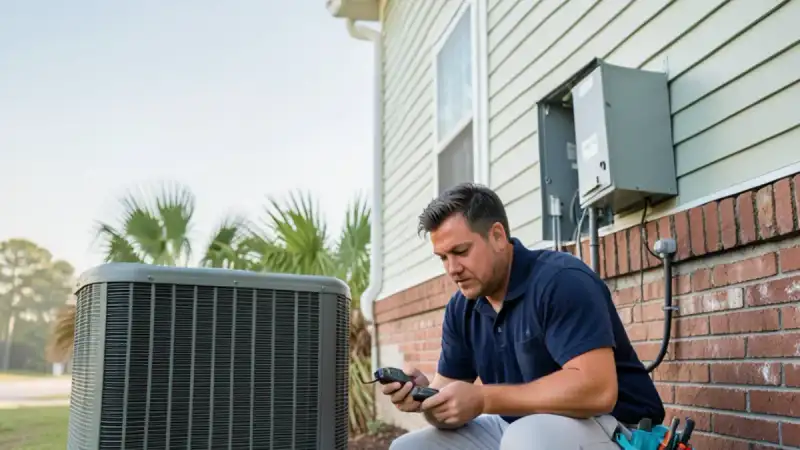
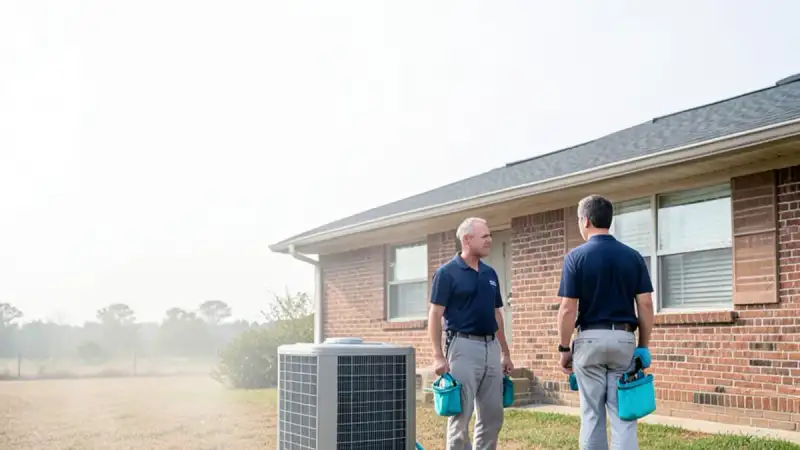
- Look at the outdoor unit. Is the fan spinning? Clear any bags or yard debris from the sides. A hum with a still fan points to a capacitor or fan motor.
- Look for ice and water. Ice on the copper line, or water in the drain pan, means the system should stay off in cool mode.
Who needs to get out of the heat first?
People come before equipment. We are HVAC techs, not medical staff, so use the health agencies for this part. The National Weather Service heat illness page and the CDC heat illness chart list the warning signs and what to do about each one. Both treat heat stroke as a 911 emergency.
The NWS heat safety page tells you to check on young children, older adults, people with chronic medical conditions and pregnant women, especially those without air conditioning. If anyone in that group is in the house, move them somewhere cool early. Do not wait to see how the repair goes.
Places to look around here:
- City of Charleston. A July 2025 city release pointed residents to an interactive map of places to cool off, including recreation centers, with hours listed.
- North Charleston. Local news has reported the Community Resource Center opening as a cooling center during hot spells. Those openings vary, so confirm before you drive.
- Anywhere else. Ready.gov suggests libraries and shopping malls, and says your local health department can point you to others.
How do you keep the house cooler while you wait?
You will not hold the temperature, but you can slow the climb.
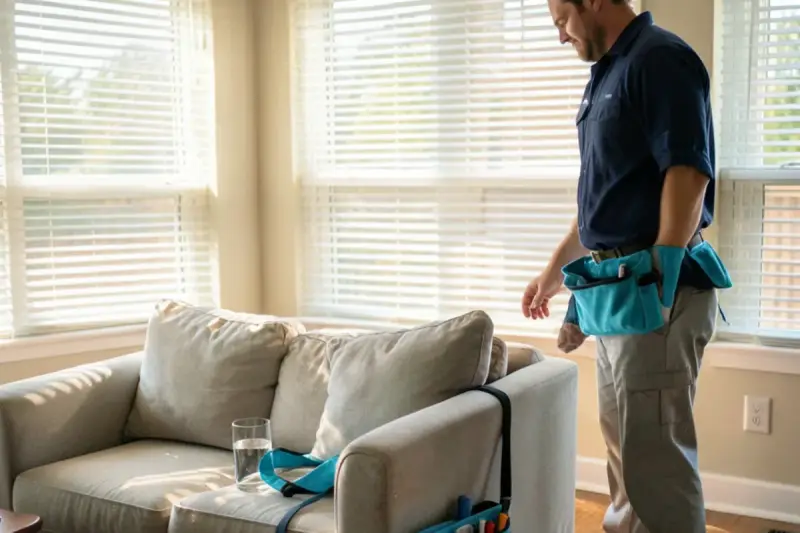
- Close blinds and drapes on any side catching direct sun.
- Skip the oven and the dryer. Ready.gov lists cutting oven use as a way to limit indoor heat, and the dryer adds heat and humidity too.
- Keep exterior doors shut during the hottest hours. Opening up at midday lets in hotter, wetter air.
- Stay low in the house. Upstairs rooms and rooms under the attic warm first.
- Treat fans with care. The National Weather Service says to use one only when the heat index is below the high 90s, because a fan can make you hotter above that.
- Take a cool shower or bath if you start feeling overheated. Ready.gov suggests this too.
Why does an AC quit during a long hot spell?
A heat wave rarely breaks a healthy system. It finds the part that was already weak. Long run times stress capacitors, contactors and fan motors, and our humidity keeps the condensate drain busy.
| What you notice | Likely cause | Your next step |
|---|---|---|
| Fan outside is still, unit hums | Weak capacitor or failed fan motor | Turn it off and call |
| Air handler runs, air is warm | Condenser not running, or a refrigerant problem | Check the outdoor breaker, then turn it off |
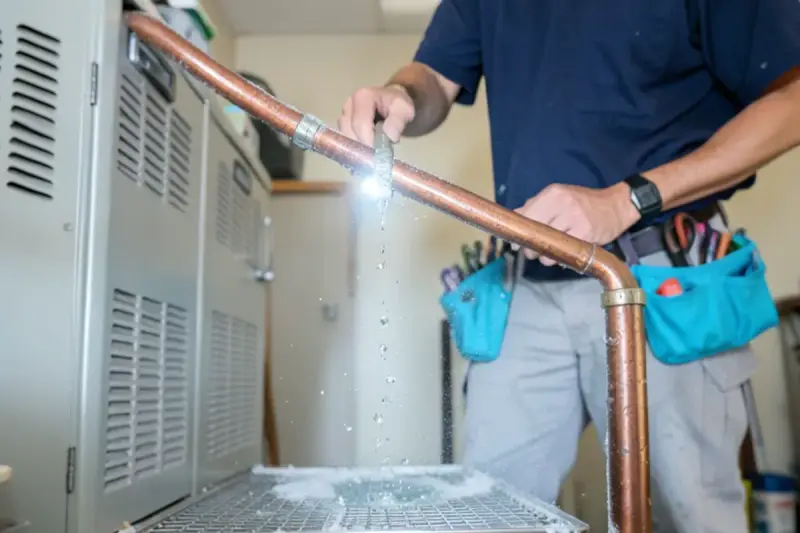
| Ice on the copper line | Restricted airflow or low refrigerant | Off in cool mode, fan on to thaw |
| Nothing at all, thermostat blank | Tripped float switch, blown control fuse or dead batteries | Replace batteries, look for water in the pan |
| Breaker trips again after one reset | Electrical fault or a failing compressor | Leave it off |
| Runs all day, house stays warm | Dirty coil, leaking duct or a unit losing capacity | Change the filter, then call for a check |
When should you leave the system off?
Leave it off if you see or smell any of these, and tell us when you call.
- A burning smell from the air handler or the outdoor unit
- Loud grinding, screeching or banging
- A breaker that trips a second time
- Ice anywhere on the refrigerant lines or coil
- Water spreading across a ceiling or floor. Catch it with a bucket and keep it away from anything electrical.
A frozen coil takes hours to thaw, so plan on that before anyone can test the system properly. Switching the thermostat to off and the fan to On speeds it up.
What do you need to tell the technician?
A clear report can shorten the visit. Write these down while you wait, because a hot house makes it easy to forget the details.
- When it stopped. Note the time, and whether it quit suddenly or faded over a few days.
- What you heard. Humming, clicking, buzzing or nothing at all each point somewhere different.
- What you tried. Tell them if you reset a breaker or changed the filter, and what happened next.
- What you saw. Ice on the line, water in the pan or a stopped outdoor fan.
- Who is at risk. Say if anyone in the home is older, very young or unwell.
Have the model number handy too. It is on the data plate on the side of the outdoor unit, if you can reach it safely in the shade.
How long can a house stay livable without AC?
That depends on the house and on who lives there. A shaded, insulated home may hold through an evening, while a top-floor room can climb quickly. Watch the people before you watch the thermometer, because an older adult can run into trouble in a home that feels bearable to you.
Set a limit before it gets bad. Decide what indoor temperature means leaving, and pick the place now: a relative's house, a library, a store or a cooling center. Ready.gov advises against relying on a fan alone in extreme heat. Charleston and North Charleston have published cooling resources during heat events, so check with your city or county when a heat advisory goes out.
Pets need the same plan. Fill extra water bowls, move them to the coolest room and never leave one in a closed house while you wait out the day elsewhere.
What can you do so this never happens in July?
Most heat-wave failures give some warning. These habits catch the common ones.
- Book a spring check. A weak capacitor or a slow drain is cheaper to fix in April.
- Keep the filter fresh. Check it monthly through summer, as the run hours add up.
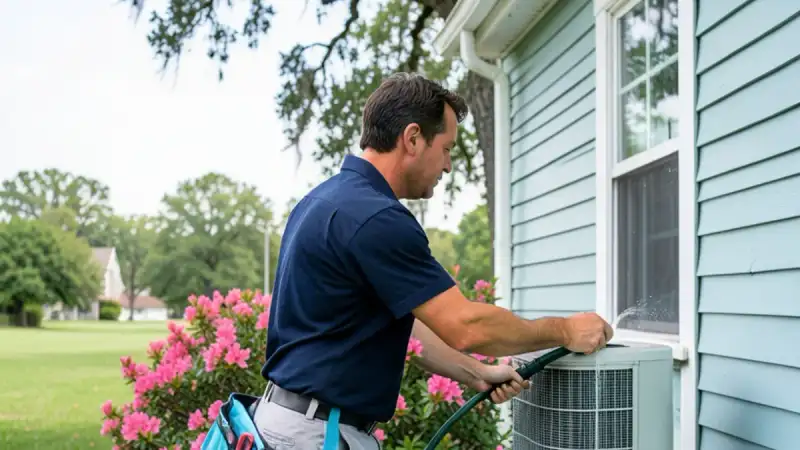
- Rinse and clear the condenser. Dirt on the fins raises pressures just when the heat is highest.
- Listen for changes. A new hum, longer cycles or short cycling are worth a call before the next forecast of 95°F.
Our advice when the AC quits on the hottest day
Call early. If the checks fail at 2 in the afternoon, do not wait to see if it recovers at sunset. Calls stack up after dark in a heat wave, so an afternoon call gives you more options.

Have these ready when you call, because they cut the guesswork:
- When it stopped and what changed just before
- What the outdoor fan is doing
- Any error light or code on the thermostat or air handler
- Whether a breaker tripped
- The age of the system, if you know it
Ask for the price before work starts. We quote before work begins, and you should expect the same from anyone. Our guide to what AC repair costs in Charleston shows homeowner-reported ranges so you can judge what you hear.
From our Charleston base we take emergency AC repair calls across North Charleston and nearby towns, and Google lists us as open around the clock. If the system is weak rather than dead, a standard AC repair visit can catch the failing part, and spring AC maintenance is the time to find it before the next long stretch of 90-degree days.
“We called Cris and he came right over. He was knowledgeable about our unit and fixed it in a matter of minutes. His professionalism was top notch and we will be calling him for any AC issues moving forward. Highly recommended. I wish I could give more than 5 stars!”
“These guys are very reliable and trustworthy. Had issues with my AC not cooling and called Aero. They came out super quick and fixed my problem AND they were really affordable. I recommend them for all your HVAC needs!”
4.9 out of 5 from 16 Google reviews (checked October 2026). Read more reviews · Leave a review
Related questions
Should I turn my AC off if it is blowing warm air?
Yes, after you have checked the thermostat, filter and breakers. A system blowing warm air may have a failed capacitor, a dead fan motor or a refrigerant problem, and running it can overheat the compressor. Set the thermostat to off, leave the fan on Auto and tell the technician exactly what you saw.
Will a fan keep my family safe if the AC is out?
Do not count on one. Ready.gov says not to rely on a fan as your main cooling device, and the National Weather Service says to use a fan only when the heat index is below the high 90s. In a Lowcountry heat wave, that often means going somewhere air-conditioned instead.
Can you come tonight if my AC stops working?
Call and ask. Our Google hours show open 24 hours, 7 days a week, but timing depends on the calls ahead of yours and where you are. Give us your address in North Charleston or nearby and we will tell you straight what is possible.