No Heat at Night: Safe Steps Before You Call a Technician
Find out what kind of system you have, run a few checks that need no tools, and keep the house safe until someone can look at it.
- 4.9★ on Google (16 reviews)
- Open 24 hours, 7 days
- Clear, upfront quotes
By the Aero Air Techs team. Published October 30, 2026, updated October 31, 2026.
No heat? What to do first depends on what kind of system you own, so start there. Then check the thermostat, the breakers and the filter. If you smell gas at any point, stop reading, get out of the building and phone your gas utility or 911 once you are outside.
Most of these checks take ten minutes and need no tools. If they do not bring the heat back, the rest of this guide covers how to get through the night safely. That matters here, because the houses around Charleston are built to shed heat. South Carolina Public Radio reported a rare winter storm and bitter cold across the Lowcountry around February 1, 2026, and our occasional freezes tend to catch homes unprepared.
No heat? What to do by system type
Over 7 in 10 South Carolina households heat with electricity, according to 2023 EIA state data, and about 23% use natural gas. So many homes here have a heat pump, not a furnace. Look at what is in your closet or attic and what is outside.
| Your system | Safe checks | Stop and call if |
|---|---|---|
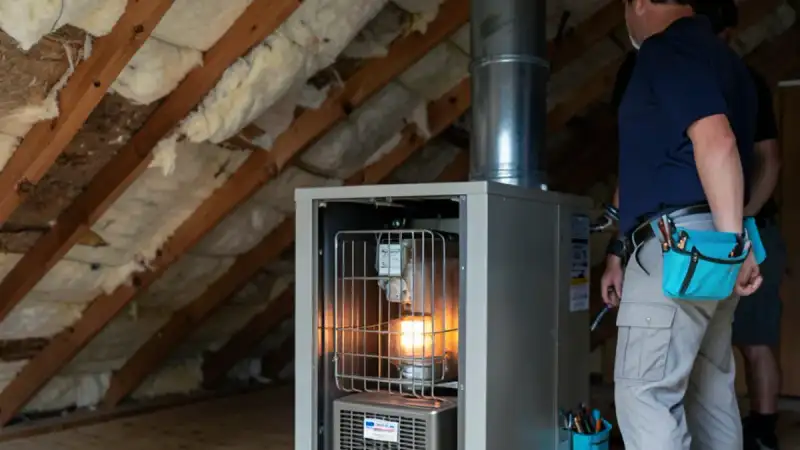
| Gas furnace | Thermostat on Heat, furnace power switch on, filter clean, door panel fully seated | You smell gas, or it starts and shuts off again and again |
| Heat pump | Thermostat on Heat, both breakers on, outdoor unit clear of debris | The outdoor unit is a block of ice, or the fan will not turn |
| Electric furnace | Thermostat on Heat, breakers on, filter clean | Breakers trip twice, or you smell burning |
- Check the thermostat. Choose Heat and set it a few degrees above the room. Fresh batteries fix more of these calls than you would think.
- Check the breakers. Reset a tripped breaker once. A second trip means leave it off.
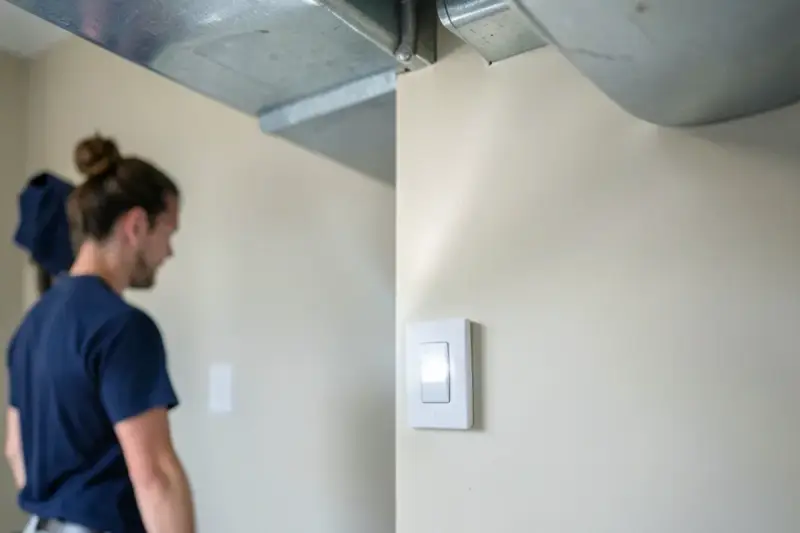
- Check the furnace switch. It often sits on the wall or the unit and looks like a light switch.
- Check the filter. A blocked filter can overheat a furnace and shut it down on a safety limit.
- Check the door panel. Furnaces have a safety switch behind the panel, so a loose one keeps the unit from starting.
What does a heat pump look like when it is working?
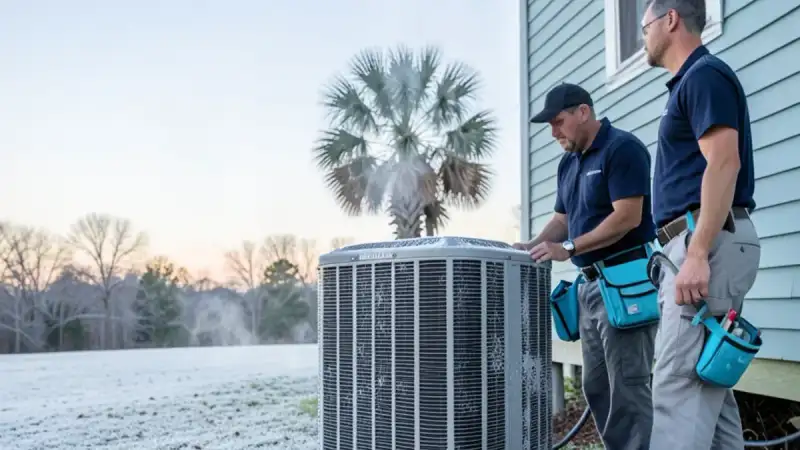
A heat pump that seems broken may be doing its job. On cold mornings the outdoor coil collects frost, and the unit runs a defrost cycle to clear it. You may see steam, hear a whoosh and feel cooler air for a few minutes. That is normal.
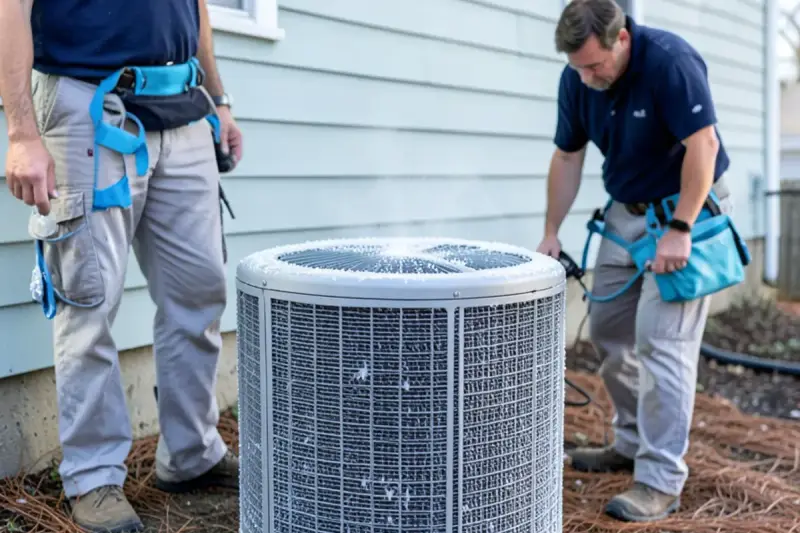
A real fault looks different. The whole coil is locked in ice, the fan does not turn, or the house keeps dropping after an hour of steady running. In that case, set the thermostat to emergency heat if it has that setting. It runs the backup electric strips without the outdoor unit. Your power use goes up, but the house stays warm until a heat pump repair visit.
Many larger homes in Mount Pleasant have two systems, one upstairs and one down. If only one is out, close that floor off and move everyone to the side that still heats.
How do you stay warm safely until help arrives?
A heating mistake on a cold night can do more harm than a cold house. CPSC and CDC both give clear rules here.
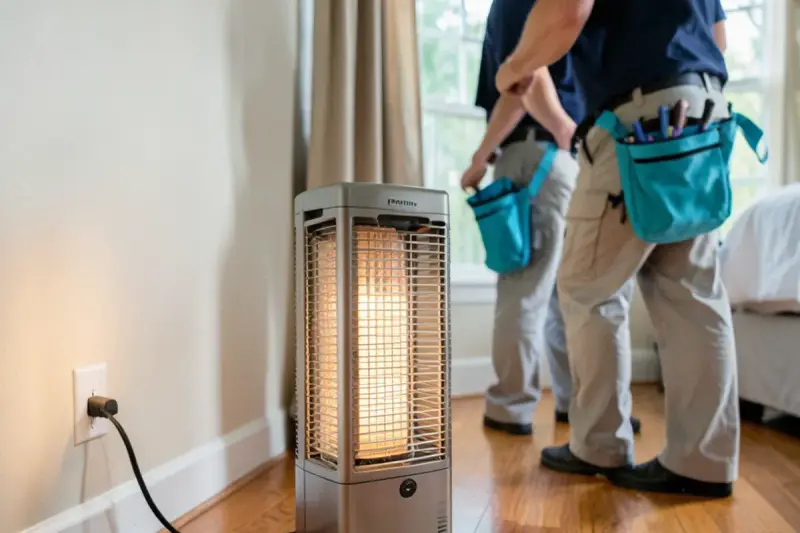
- Space heaters. CPSC says to keep all sides at least three feet from anything that can burn, set the heater on a stable, level surface, plug it into a wall outlet and never a power strip.
- Never use a gas oven for heat. CDC warns it can cause carbon monoxide poisoning.
- Generators stay outside. CPSC says to run them at least 20 feet from the house with the exhaust pointed away from doors and windows, and never in a garage or crawl space.
- Carbon monoxide alarms. CPSC says to get outside and call 911 when one sounds. Do not silence it and go back to bed.
- Layers and one room. Close doors, roll a towel against the drafts and keep everyone in the warmest room.
Will your pipes freeze if the heat stays off?
They can, and raised homes carry more risk because lines may run through open air under the floor. If a freeze is in the forecast and the heat is out, the Red Cross guidance gives you three simple steps.
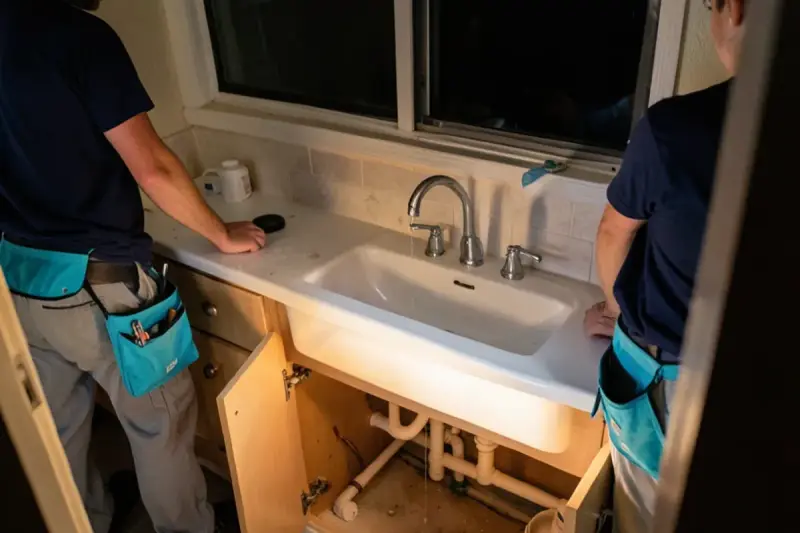
- Let cold water drip from faucets served by exposed pipes.
- Open kitchen and bathroom cabinet doors so room air reaches the plumbing.
- Keep garage doors closed if water lines run through the garage.
If you find a frozen line, do not use a torch or any open flame to thaw it. Know where your main water shutoff is before the pipe gives way, not after.
When does no heat become an emergency?
Most no-heat nights are uncomfortable and not dangerous. Treat it as urgent if any of these apply:
- An infant, an older adult or someone with a medical condition is in the home
- A freeze is forecast and your pipes are exposed
- The furnace keeps cycling and you hear a bang or smell something burning
- A carbon monoxide alarm has sounded, in which case get out first and call 911
If gas is the concern, our guide on what to do when you smell gas near a furnace covers it step by step.
What should you have ready when you call?
A short list saves time on both ends of the phone, and it helps decide whether a night visit makes sense.
- What you heat with. Gas furnace, electric furnace or heat pump, if you know.
- What the system is doing. Silent, blowing cold, cycling on and off, or iced over outdoors.
- Who is in the home. Infants, older adults or anyone with a medical condition change the urgency.
- What the forecast says. A freeze tonight is different from a mild night.
- Any lights or codes. A phone video of a blinking board is useful.
- The model number. Take it from the label if you can reach it safely.
How long can a house stay safe without heat?
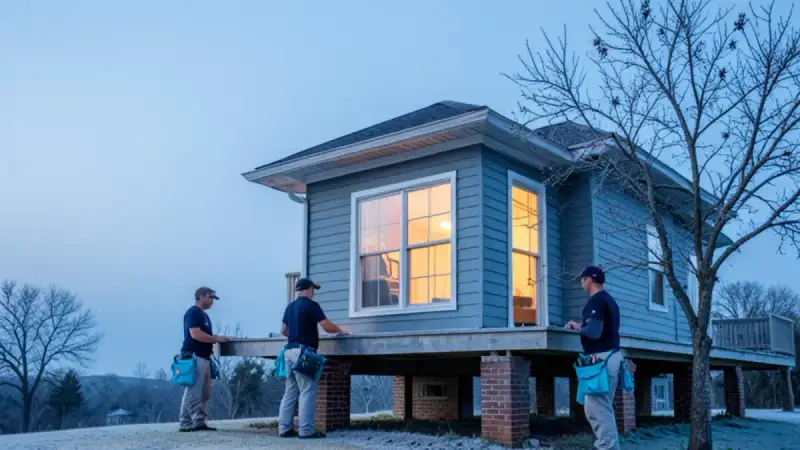
It depends on the weather and the house. Around Charleston, a mild night in an insulated home is usually an inconvenience. A freeze in a raised house on piers is different, because cold air moves under the floor and water lines can sit exposed.
Older houses lose heat quickly, so close the doors to rooms you are not using and gather everyone in one space. Hang a blanket over a drafty door, and keep the kitchen and bath cabinet doors open if a freeze is near. Check on older neighbors, too. Mount Pleasant and the barrier islands rarely see a hard freeze, but when one comes, few homes are ready for it.
What can make the morning harder?
A few well-meant moves can add to the problem, so skip these.
- Do not keep resetting. Repeated resets can flood a furnace with unburned gas or cook a motor.
- Do not run the emergency heat all night unless you must. On a heat pump, it works, but it can run up your electric bill quickly.
- Do not bypass any switch. Safety switches stop the furnace for a reason.
- Do not leave a space heater running while you sleep. CPSC advises turning heaters off when you leave the room or go to bed.
- Do not set a big temperature jump in the morning. A steady setting is easier on a heat pump's backup strips once it is working.
What we say on a cold-night call
Tell us three things: what kind of system you have, what the thermostat shows and whether anyone in the house is at risk from the cold. That lets us give you the right next step on the phone, and sometimes the answer is a tripped switch you can reset before you hang up.
Do not keep resetting anything. One reset is a test. Three resets is how a small electrical fault becomes a burned board or a cooked motor.
Take a picture of any error light on the furnace or air handler before you touch the power. Those lights often clear when power cycles, and the blink pattern tells a technician where to start.
From our Charleston base, Aero Air Techs takes emergency furnace repair and heat pump calls in Mount Pleasant and nearby. Our Google hours read open 24 hours, 7 days a week, and you get a clear, upfront quote before repairs start. Once the heat is back, ask what failed and whether a fall check would have caught it. A planned furnace repair in October beats a scramble at midnight in January.
Related questions
Is it safe to use emergency heat on my heat pump?
Usually yes, for a night. Emergency heat runs the electric strips and skips the outdoor unit, so it can keep the house warm when the heat pump has failed. It uses more power, and a Mount Pleasant home with two systems may only need it on one. If the strips smell like burning, shut it off and call.
Should I relight my furnace myself?
Only if your furnace has a standing pilot, you follow the printed instructions on the unit and you smell no gas at all. Most modern furnaces have no pilot to light. If you smell gas, do not touch anything. Get out and phone your gas utility or 911 once you are clear of the house.
Do pipes really freeze in Mount Pleasant?
They can during our occasional freezes, especially in crawl spaces, on exterior walls and under raised homes where lines run exposed. The Red Cross advice is to let cold water drip from faucets on exposed lines and open sink cabinets. Those steps matter more if the heat is out.
Can a technician come at night?
Call and ask. Google lists us as open 24 hours, 7 days a week, though timing depends on the calls ahead of yours and your address. Tell us what kind of system you have and whether anyone in the house is at risk from the cold.