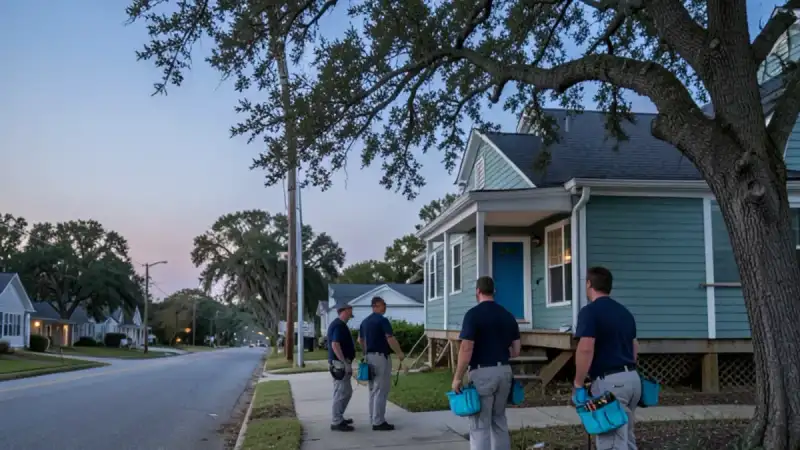
Smell Gas Near Your Furnace? What to Do First
Leave the building now. Do not touch switches. Call the gas utility or 911 from outside, and only after that call a contractor.
- 4.9★ on Google (16 reviews)
- Open 24 hours, 7 days
- Clear, upfront quotes
By the Aero Air Techs team. Published October 30, 2026, updated October 31, 2026.
Leave the building now. If you smell gas near your furnace, do not touch any switches, do not stop to look for the source, and do not try to fix anything. Get everyone out, walk well away, and call the gas utility or 911 from outside.
Only after the utility or responders have dealt with it should you call a contractor.
If you smell gas, do these things in this order
This order comes from federal and utility safety guidance. The U.S. Consumer Product Safety Commission says to leave your home immediately and contact local gas authorities from outside, and not to operate lights or phones before leaving. The federal pipeline safety agency, PHMSA, says to call from well away from the leak. Dominion Energy gives the same message.
- Leave the building. Take people and go. Do not stop for belongings.
- Touch nothing that could spark. No light switches, no thermostat, no appliances, no garage door opener, no matches or lighters.
- Knock on doors, do not ring bells. If you need to warn a neighbor, PHMSA advises knocking by hand.
- Get well away, then call. Call the gas utility or 911 from a neighbor's house or another spot away from the building. Your gas bill has the utility's emergency number. If you do not have it, call 911.
- Stay out. Do not go back in until the utility or responders say it is safe.
- Then call a contractor. Repair comes last, after the hazard has been dealt with.
Do not start a car parked in the garage or next to the building. PHMSA lists starting an engine among the things to avoid near a leak.
Which gas utility do you call?
Your bill tells you. We will not guess at a utility for your address, because service depends on the street and not the town name.
- Natural gas. Dominion Energy serves parts of the Charleston region. EIA's 2023 state data shows about 23% of South Carolina households heat with natural gas, so plenty of homes here have no gas line at all.
- Propane. About 3% of South Carolina households heat with propane, per the same EIA data, and many of them are rural. Your supplier's number is usually on the tank or the bill.
- Not sure? Call 911. You do not need to know your utility to get help.
The SC Office of Regulatory Staff oversees pipeline safety in the state, but it is a regulator and not an emergency line.
What are the signs of a gas leak?
Natural gas has no smell of its own. Utilities add an odorant that smells like rotten eggs or sulfur. Dominion Energy notes that the odor can sometimes be weak or missing even when a leak exists, so trust other signs too.
| What you notice | What it may mean | What to do |
|---|---|---|
| Rotten egg or sulfur smell | Gas odorant | Leave now and call from outside |
| Hissing or whistling near a gas appliance or line | Gas escaping | Leave now and call from outside |
| Bubbles in wet ground or dead plants over a gas line | Underground leak | Stay away and call from a distance |
| CO alarm sounding | Carbon monoxide, which has no smell | Get outside and call 911, as CPSC directs |
| Dusty, burning smell at the first heat of the season | Often dust on the heat exchanger | Open a window. If it lasts or you doubt it, treat it as gas |
If you are unsure, treat it as gas. Nobody will fault you for a false alarm, and utilities expect these calls.
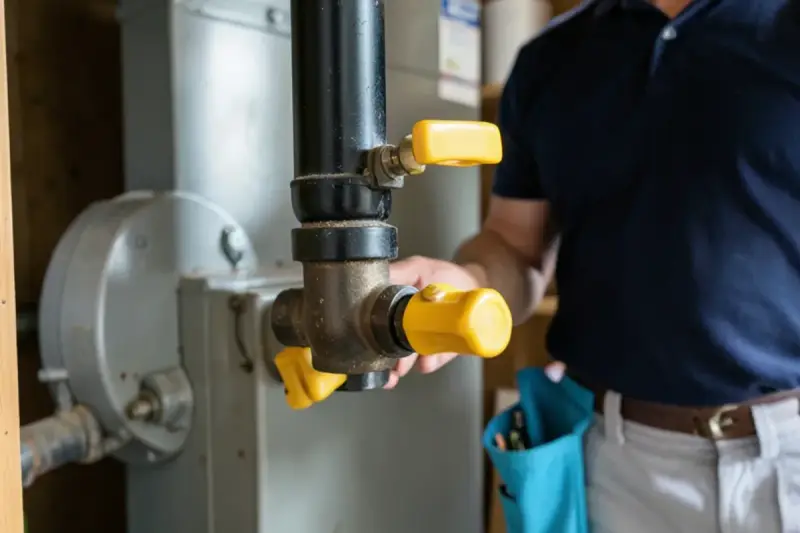
Does propane change what you should do?
The first steps stay the same: get out, no flames, no switches, and call from a safe distance. The Propane Education and Research Council adds two points worth knowing.
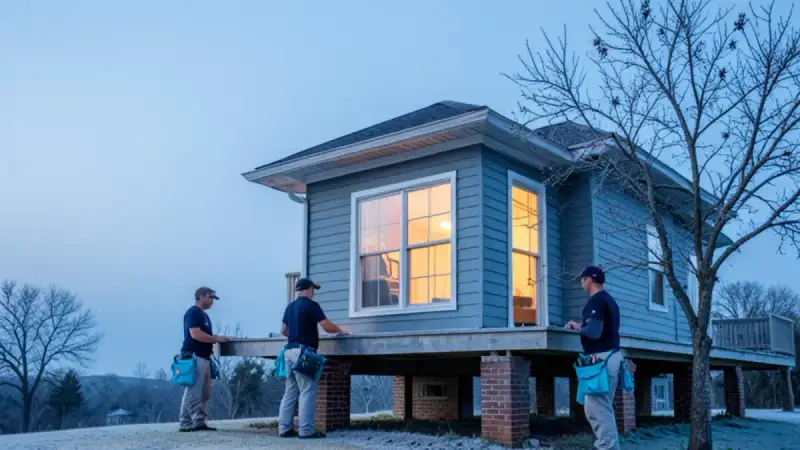
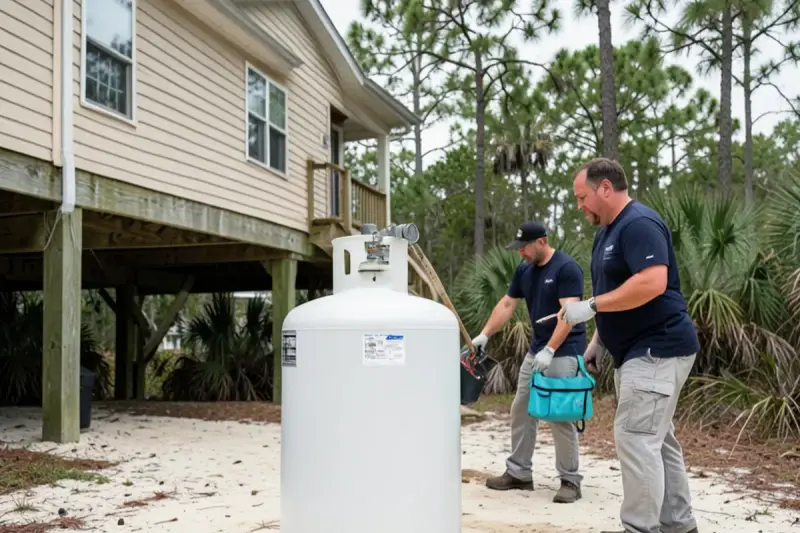
Propane is heavier than air, so it settles in low spots. On a raised Lowcountry home, that can mean the crawl space or a closed area under the floor. Keep people out of those spaces.
The council says to call your propane supplier from a safe place, or 911 if you cannot reach them. It also says that closing the tank valve is something to do only if it is safe, and that a qualified person has to check the system before anything is turned back on.
What happens after the gas is off?
Expect the utility or fire department to check the house and possibly shut gas off at the meter or to the appliance. They may tag a furnace as unsafe to use. Leave that tag in place. The house may have no heat for a while, so our guide to safe steps when you have no heat covers the rest of the night.
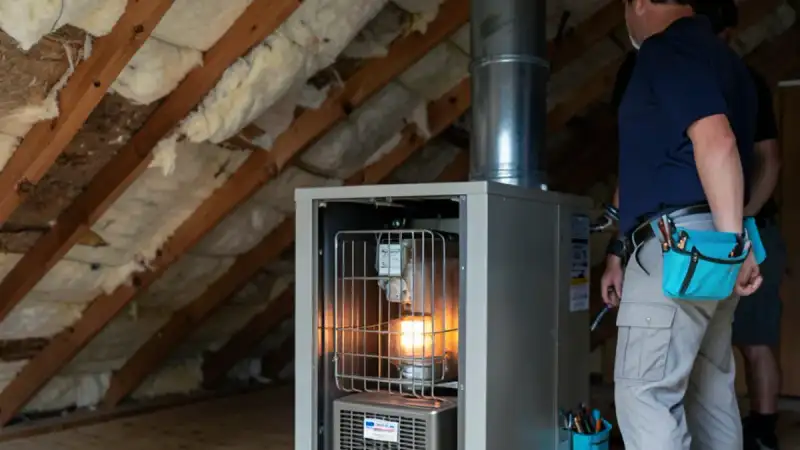
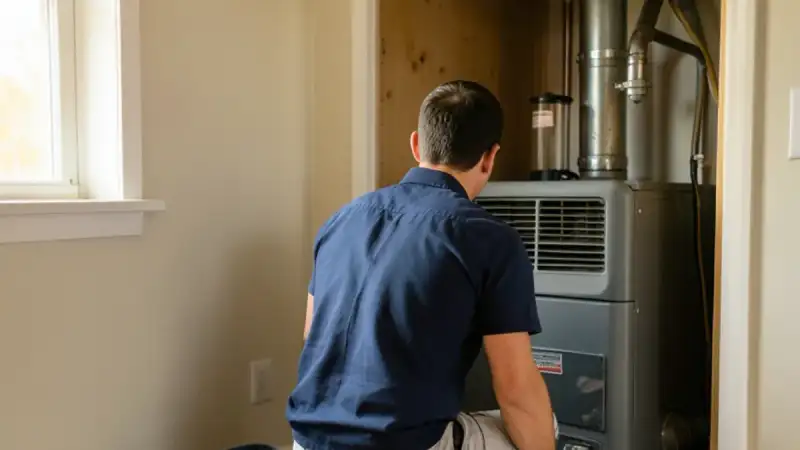
A technician then has to find the source. Common spots near a furnace include flex connectors, the gas valve, and threaded joints in the pipe. Soap tests and a gas detector show where it is coming from. After a repair, the line should be tested for leaks before the furnace is lit again.
Which office handles any required permit depends on your address. On James Island, homes may sit in the Town of James Island, the City of Charleston or unincorporated Charleston County. The town's site says that from May 1, 2026, it handles new building permits and inspections through SAFEbuilt, so ask whichever office covers your parcel.
Why does gas sometimes smell at the furnace on startup?
A faint whiff can happen, and it should never be assumed harmless. Utilities add a sulfur-like odorant to natural gas so you can smell a leak. Some older appliances can give off a brief trace of it as the burners light, but you cannot tell that from a leak by nose alone.
So use one rule. If you can smell gas, treat it as a leak and follow the steps above. Let the utility or a technician with a gas detector decide if it was harmless. Nobody ever regrets a call that turned out to be nothing.
Do not confuse these other smells with gas, though they still deserve attention.
- Dusty or burning dust. Common on the first heating cycle of the season, and it should fade.
- Hot plastic or electrical. Turn the system off and call.
- Exhaust or fumes. Treat it as a possible venting problem, especially with headaches or a CO alarm.
- Rotten eggs near a drain. This can be a sewer trap, but if you are unsure, treat it as gas.
Would a natural gas leak set off your CO alarm?
No, not by itself. A carbon monoxide alarm detects CO, the product of incomplete burning, and it does not detect natural gas. They are two separate hazards, so a silent CO alarm does not prove the air is safe when you can smell gas.
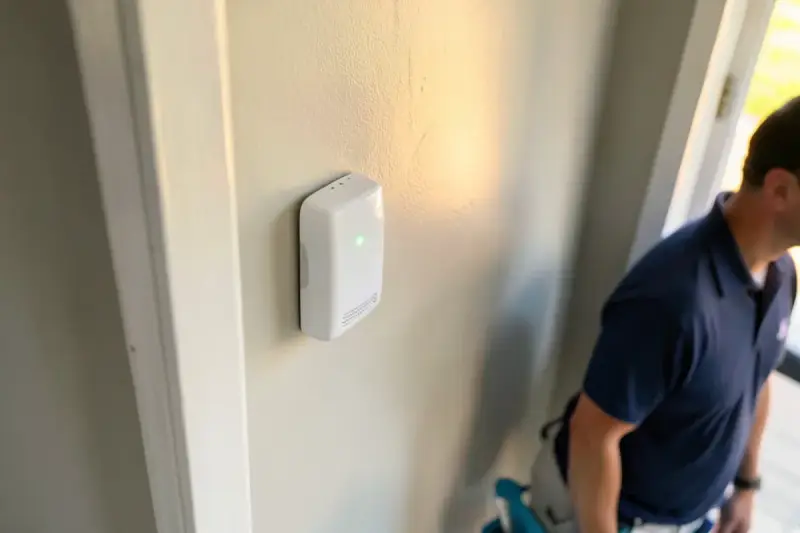
Combination alarms exist, and an explosive gas detector can be a useful backup. Use them as added protection, and follow the manufacturer's advice on placement, because natural gas rises and propane sinks. Never rely on a detector over your own nose, and get out if you smell gas even when nothing is sounding.
How can you lower the risk before winter?
A little planning covers the common causes.
- Book a yearly check of gas appliances. Ask that connections, burners and venting are all covered.
- Find your gas meter and shutoff. Know where it is, but leave any shutoff to the utility or responders during a leak unless they tell you otherwise.
- Keep the closet clear. Stored chemicals can create fumes, and clutter blocks air the burner needs.
- Fix a recurring pilot or ignition fault. Do not keep relighting anything that keeps going out.
What we tell anyone who calls about a gas smell
Hang up and get out. If you call us first and you are still inside, that is the first thing we will say. We are a heating and cooling contractor, not the gas company, and the utility and 911 are the ones who can make the house safe.
Once they have cleared it, we can help with emergency furnace repair on James Island and across the surrounding areas. We are based in Charleston, Google shows us open 24 hours, and we quote before work begins.
Three things are worth doing once this is behind you:
- Get a CO alarm on every level. CPSC recommends alarms with battery backup on each level and testing them monthly.
- Teach everyone the order. Children and guests should know that the smell means leave, not look around.
- Book a fall check. A yearly furnace maintenance visit puts eyes on the gas connections before the first cold night, and any furnace repair it turns up can be planned.
Do not relight a furnace after a gas smell unless a qualified technician has checked it first. Do not trust an alarm that stayed quiet, either. A smell alone is reason enough to walk out.
Related questions
Should I shut off the gas valve before I leave?
No. Leave first. Dominion Energy's safety guidance tells people not to operate gas valves or hunt for the source, and every minute inside is a minute you could be outside. The gas utility or fire department will decide what gets shut off. On James Island or anywhere else, the same order applies.
Is it safe to call from my cell phone?
Call once you are outside and well away from the building. CPSC says not to operate electronics such as lights or phones before leaving, and PHMSA says to call from a location well away from the leak, such as a neighbor's house. Walk first, then dial.
Who is my gas utility?
Check your gas bill, because it depends on your address. Dominion Energy serves natural gas in parts of the Charleston region, and some rural homes use propane from a private supplier. If you do not know who to call while you are standing outside, call 911.
When can I go back inside?
When the gas utility or emergency responders tell you it is safe, and not before. Keep the gas off to that appliance until a qualified technician has inspected and repaired it. A smell that fades does not mean the problem is gone, so do not decide this yourself.
Sources
- CPSC, winter weather safety tips, 2026 (gas leak guidance)
- PHMSA, pipeline leak recognition and what to do
- Dominion Energy, natural gas safety
- Propane Education and Research Council, what to do if you smell gas
- South Carolina Office of Regulatory Staff, pipeline safety
- U.S. EIA, South Carolina state energy data
- Town of James Island, permits and inspections notice