
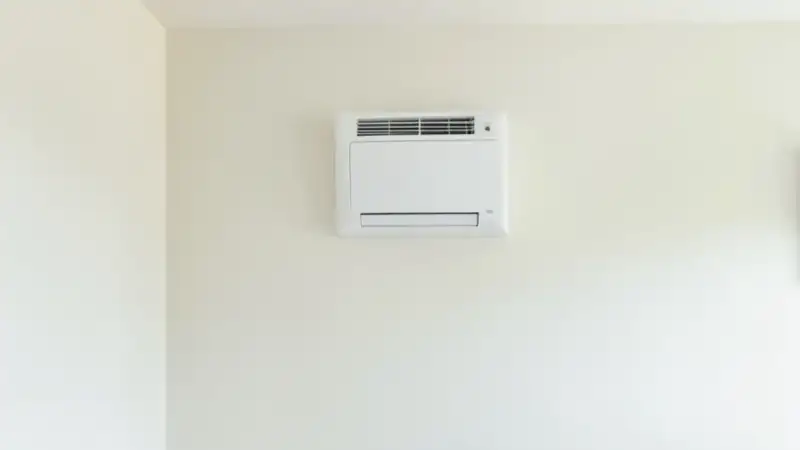
Ductless Mini Split vs Central Air
Good ducts usually mean central air. No ducts, or one problem room, usually means a mini split. The details below settle the close calls.
- 4.9★ on Google (16 reviews)
- Open 24 hours, 7 days
- Clear, upfront quotes
By the Aero Air Techs team. Published October 30, 2026, updated October 31, 2026.
Mini split vs central air is mostly a question about ducts. If your house has sound ductwork, central air is usually the simpler and more familiar choice. If there are no ducts, or you need to fix one room or an addition, a ductless mini split is often the better tool.
Neither one wins everywhere. Central air treats the whole house as one or two zones. A mini split treats each room or area as its own zone. The right pick depends on the house, how you use it and what you are replacing.
Mini split vs central air, side by side
Here is the fair version, with the trade-offs on both sides.
| Factor | Ductless mini split | Central air |
|---|---|---|
| Needs ductwork | No | Yes |
| Zones | Each indoor head has its own control | Usually one zone per system, unless zoned |
| Duct losses | None | Depends on duct condition and location |
| Whole-house coverage | Takes several heads, and closed rooms can lag | Reaches every room with a register |
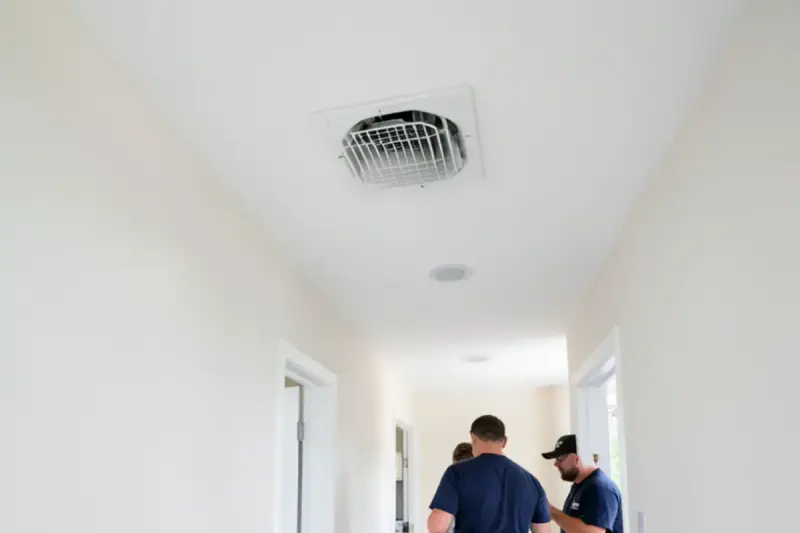
| Look | Visible head on the wall or ceiling | Hidden, with registers and a return grille |
| Filters | Washable filters in every head | One or two filters at the return |
| Install disruption | Small wall openings and line sets | Light for a like-for-like swap, heavy for new ducts |
| Humidity control | Good when sized right; each head handles its own room | Good when sized right; a central dehumidifier can be added |
| Heat | Most models are heat pumps | Needs a heat pump or a furnace |
| Air filtration upgrades | Limited by the head | Media filters and whole-home add-ons fit the duct system |
When does central air make more sense?
Central air is the sensible default when good ducts already exist. You keep one thermostat and one main filter, and you have nothing mounted on your walls.
It usually wins in these cases:
- The ducts are sized properly, sealed and in reasonable shape
- You are replacing an existing central system
- You want every room conditioned, including closets and baths
- You plan to add whole-home filtration or a dehumidifier to the duct system
- Your household would rather not see or maintain indoor heads
A central system lives or dies by its ducts, though. A DOE guide warns that duct losses can reach 30% or more when ducts are leaky, poorly insulated and run through an uninsulated attic or crawlspace. If your rooms are uneven, have the ducts tested before you decide the system is the problem. Our duct repair page covers what that involves.
When does a mini split win?
A mini split wins when ducts are missing, impossible or not worth extending. It is often the cleanest answer for an addition.
- Room additions and bonus rooms. Stretching an existing system to a new room can leave both ends short.
- Garages and workshops. No ducts run there, and you may only want cooling sometimes.
- Rooms over the garage. One hot space should not force the whole house colder.
- Homes without ducts. Older houses and homes with limited attic space can skip major ductwork.
- Historic buildings. In the City of Charleston's historic districts, the Board of Architectural Review guidelines say HVAC units must not be visible from the public right-of-way, so outdoor unit placement still needs a check.
DOE's HVAC guide explains the efficiency case. Because the heads sit inside the conditioned space, mini splits avoid the distribution losses of leaky ducts, and units can be turned off in rooms nobody is using. It also says ductless systems are a good option for additions. That guide dates to 2011, so treat it as background, not a current product comparison.
What are the downsides of ductless?
Be honest with yourself about these before you buy.
You will see the equipment. Some homeowners stop noticing a head on the wall. Others never do. You also take on more filter care, since each head has a washable filter, and those need regular cleaning. A dirty head can cool poorly, smell musty and hold moisture.

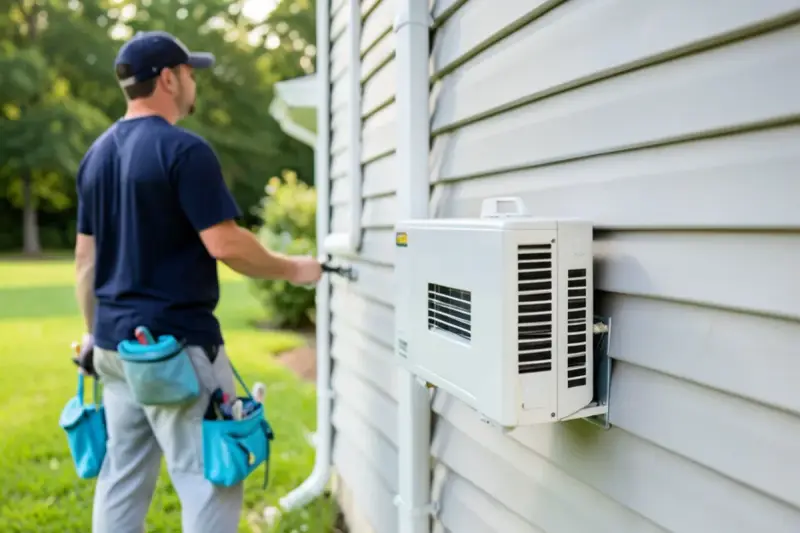
Each head also has its own condensate drain, so there are more places to clog. In a humid climate that is worth planning for. Then there is coverage. A head can only serve the air it can reach, so one unit in a hall will leave closed bedrooms warm. DOE's guide notes that more than one indoor unit is typically needed to serve a whole house, and it says up to eight can connect to a single outdoor unit.
How do you test your ducts before you choose?
Check before you spend, because the ducts decide most of this. Four simple checks will tell you whether central air is really an option.
- Walk the registers on a hot afternoon. Hold a hand at each one. A room with weak airflow points to a blockage, a crushed run or a long branch.
- Look at the attic or crawlspace. Sagging flex, torn wrap and wet insulation all count against keeping the ducts.
- Find the return. One small return for a large house starves a central system, however good the outdoor unit is.
- Ask for a duct leakage or static pressure test. Numbers beat opinions, and a contractor can show you the reading.
If the ducts pass, a central system is simple to justify. If they fail, price the repair before comparing anything else, because a new central unit on bad ducts keeps the same problem.
Which one handles Charleston humidity better?
Neither one does automatically. Comfort here depends on how long the coil stays cold and how slowly it runs. An oversized central system cools fast and shuts off before it pulls much water from the air, and an oversized mini split head does the same in one room.
Inverter compressors help both. They slow down instead of cycling, so the coil stays wet and keeps dehumidifying. Many mini splits use them, and so do many higher-tier central systems.
Closed doors change the picture. A head in the main room may not reach a shut bedroom, so a whole-house ductless layout usually needs a head in each space that matters. Central air moves air through every room with a register, and a whole-home dehumidifier can be tied into the ducts. If the house stays sticky at the set temperature, sizing and airflow are the first things to check on either system.
What about upkeep and the long run?
Plan for different chores. Central air gives you one filter to change, a drain line to keep clear and a condenser to rinse. A mini split gives you a filter in each head, a small coil that needs a professional cleaning when it fouls, and one drain per head.
Think about replacement too. Mini split parts are often specific to a brand and model line, so ask how long replacement parts stay available. A central system's ducts can outlast several condensers if they stay sound, which is part of why good ducts are worth protecting.
What does this look like in a Ladson home?
For most Ladson subdivision houses, the honest answer is both: keep central air for the main floor and add ductless where it falls short. Many homes off I-26 already have working ducts, so tearing them out would make little sense. A bonus room or a converted garage is where a mini split usually earns its keep.
Long run hours and tight construction are the bigger inland concerns here, more than salt. A system that runs for months needs clean coils and a clear drain, whichever type you pick.
Check permits before work starts. Ladson is a census-designated place spread across Berkeley, Charleston and Dorchester counties, so your address decides which county's rules apply.
Our take when customers ask which is better
Fix the actual problem. If one room is hot, find out why first. A disconnected duct or a blocked return costs far less to fix than a new system. If the whole house struggles, look at the ducts before you look at the equipment.
Ask for a load calculation on either route. Manual J gives you the cooling each space needs, and a mini split is especially unforgiving of guesswork because each head serves a small area. An oversized head short cycles, and that is a poor result in a humid house.
If you are torn, compare both on one quote. Our ductless mini split and AC installation pages show how each job runs. We are based in Charleston and serve the surrounding areas, and we quote before work begins.
Related questions
Can a mini split cool a whole house?
Yes, with enough heads and a layout that suits it. A DOE guide notes that more than one indoor unit is typically needed for a whole house. Closed bedrooms are the catch, since one head in a hallway will not reach them well. A room-by-room load calculation shows what a Ladson home would need before you commit.
Does a mini split control humidity as well as central air?
It can, if it is sized correctly and runs long enough. Variable-speed mini splits slow down at part load, which helps them keep pulling moisture from the air. An oversized head short cycles and leaves the room clammy, the same as an oversized central system. Ask how the system will be set up for Lowcountry humidity.
Is a mini split cheaper than central air?
It depends on whether you already have ducts. A 2011 DOE guide says mini splits generally cost about 30% more than central heat pumps, not counting ductwork, but can be the cheaper first cost where ducts would have to be added. Compare line-itemed quotes on your own home, since the guide's comparison is dated.
Sources
Services this guide relates to

Ductless Mini Split Installation
Zoned cooling and heating for additions, garages and homes that cannot take ducts.

AC Installation
New systems for builds, additions and duct-free homes, sized by load calculation.

Duct Repair and Replacement
Leaks sealed and failed runs rebuilt in attics and crawl spaces, with airflow checked.