Why Charleston Homes Feel Humid Even With the AC On
Measure the humidity first, then work through short cycling, leaky ducts, damp crawl spaces and blocked drains before you buy anything.
- 4.9★ on Google (16 reviews)
- Open 24 hours, 7 days
- Clear, upfront quotes
By the Aero Air Techs team. Published October 30, 2026, updated October 31, 2026.
If your Charleston house feels humid with the AC on, one of three things is usually going on. The system is not running long enough to dry the air, damp air keeps getting in, or something in the system is blocked or low.
An air conditioner dries your home as a side effect of cooling it. Warm air crosses the cold indoor coil, water condenses on the coil and runs out the drain. Stop that process early, or feed it more wet air than it can handle, and you get a house that reads 74 on the thermostat and still feels clammy.
How humid should a Charleston house be with the AC on?
Below 60 percent. EPA says to keep indoor humidity below 60 percent relative humidity if possible, and ideally between 30 and 50 percent. In a Lowcountry summer, staying under 60 is the line to hold first.
Do not guess. Comfort is a poor gauge, because a house can feel fine at noon and sticky at bedtime. Do this instead:
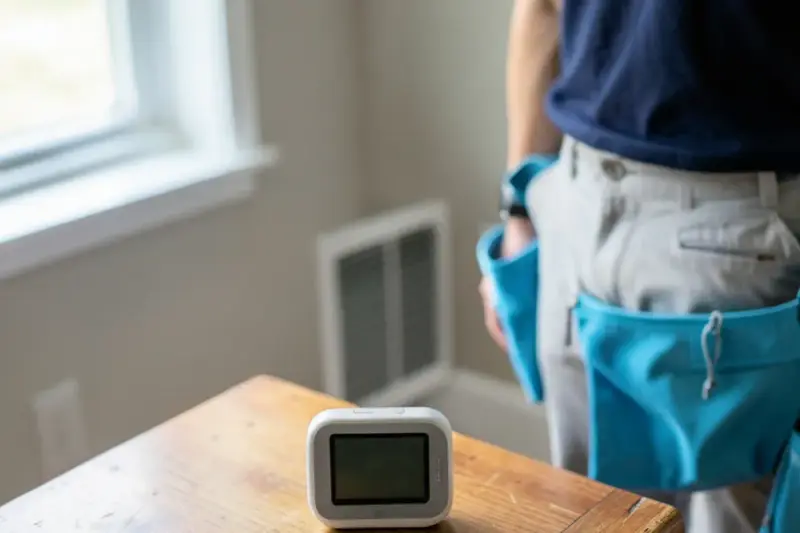
- Buy an inexpensive humidity meter from a hardware store.
- Set it in a central room, away from the kitchen, baths and supply vents.
- Read it twice a day for a week, with the AC running as usual.
- Write the numbers down, along with the thermostat setting.
Those readings tell you more than any description of how the house feels, and they give a technician somewhere to start.
Why does the air stay sticky while the AC runs?
Match what you notice to the likely cause. Most homes have one main problem and one smaller one.
| What you notice | Likely cause | First step |
|---|---|---|
| House cools fast, then the AC shuts off and feels clammy | Oversized system or short cycling | Time a few cycles on a hot afternoon |
| Fan runs all day | Thermostat fan set to On | Switch to Auto |
| Long runs with weak airflow | Dirty filter or coil | Check the filter, then book a coil cleaning |
| Long runs and the house never catches up | Low refrigerant or a failing part | Call for a service check |
| Musty smell or dust near returns | Leaky ducts pulling attic or crawl space air | Have the ducts tested |
| Damp floors or a wet smell downstairs | Moisture from under the house | Look in the crawl space |
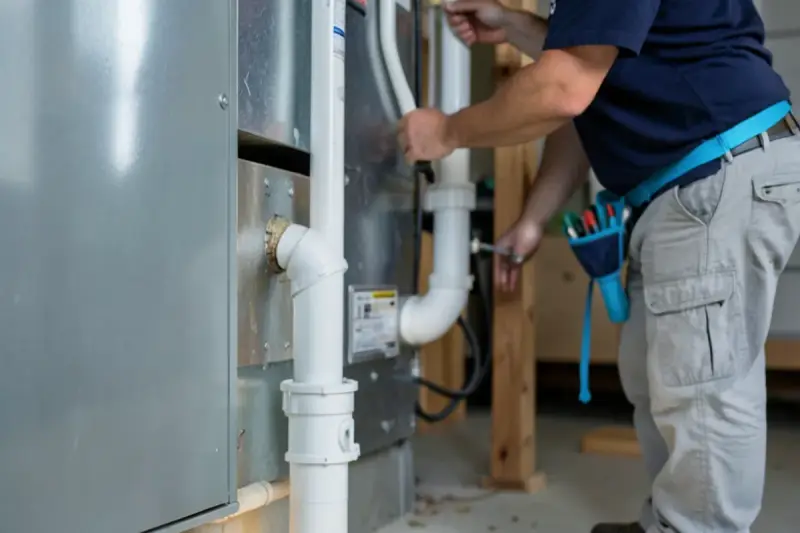
| Water at the air handler | Plugged condensate drain | Shut it down and call |
ENERGY STAR's maintenance checklist backs up that last row. It says a plugged drain can cause water damage and can affect indoor humidity. EPA adds that drip pans should stay clean and drain lines should run clear.
Can an oversized AC make a house more humid?
Yes, and it is a common reason a newer system still feels damp. ENERGY STAR explains that an air conditioner has to run long enough for moisture to condense on the coil and drain away. In a right-sizing fact sheet from 2005, it says short cycling on oversized units cuts the water that drains off and even lets some moisture evaporate back into the air.
The same sheet says air conditioners take about 10 minutes to reach peak efficiency. So time a few cycles on a hot afternoon. If the system keeps shutting off well before that, ask about sizing.
Sizing should come from a Manual J load calculation. That is the standard room-by-room math for how much heat a house gains. Matching the tonnage on the old unit is not the same thing, because the house may have gained insulation, windows or air sealing since then.
Where does the moisture come from in a Summerville home?
Moving inland does not get you out of this. Homes in Summerville are away from the salt, but the summer air is still heavy, and the moisture finds its way in through a few familiar routes.
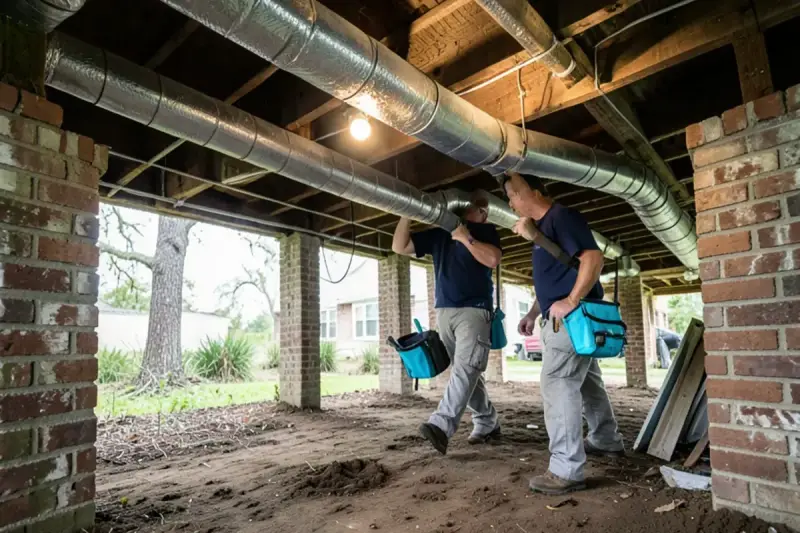
- Ducts. A leak on the return side of a duct in an attic or crawl space pulls hot, wet air straight into the system. Our duct repair page covers how that gets found and sealed.
- Crawl spaces. Open soil under an older home gives off moisture. The floor is not a perfect barrier.
- Gaps in the house. Older homes around the historic district often leak more air than newer ones, and every gap brings in wet outdoor air.
- Daily life. Showers, cooking and laundry all add water. Run the exhaust fans, and check that they vent outdoors.
When does a whole-home dehumidifier make sense?
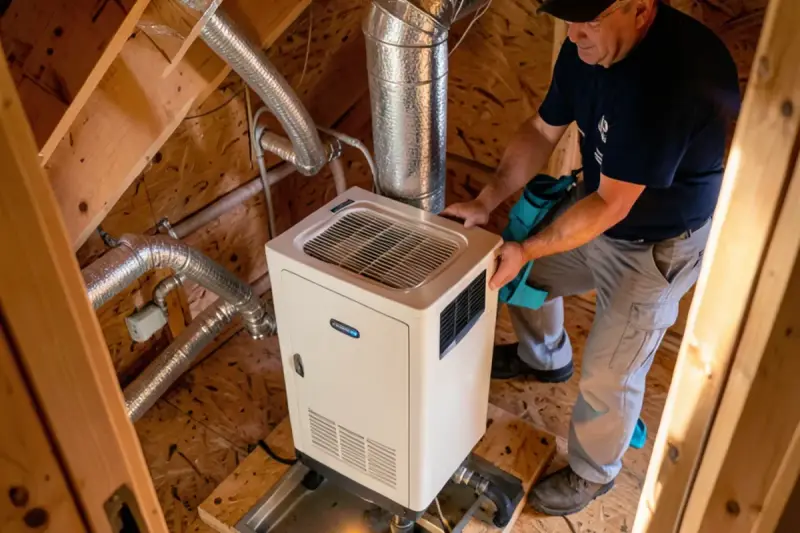
When the house is sound and the AC simply is not running enough. This shows up on mild, rainy days. The thermostat is satisfied, so the compressor stays off, yet the air outside is soaking wet. A system sized perfectly for a 95-degree afternoon can still struggle on a 75-degree day with rain.
A whole-home dehumidifier works apart from cooling, so it can dry the air when the AC has no reason to run. It does not fix the causes above. Work in this order:
- Clear the drain, change the filter and clean the coil.
- Set the fan to Auto.
- Seal duct leaks and deal with crawl space moisture.
- Check whether the system is sized to the house.
- Measure again, then add a dehumidifier if the numbers still sit too high.
Which thermostat settings make a house feel drier?
Start with the free fixes. Two settings can change how a house feels by the end of the week.
- Set the fan to Auto. With the fan On, air keeps crossing a wet coil after the compressor stops, and moisture goes back into the house. This one change often helps.
- Avoid deep setbacks in summer. Letting the house warm up during the day means a long recovery, and walls and furniture pick up moisture you then have to remove.
- Use dehumidify mode if your system has it. Some variable-speed systems slow the blower to wring more water out.
- Lower the temperature a degree or two only as a test. A colder setting can hide a humidity problem without solving it.
Keep a note of your humidity readings while you try each change, so you can see which one really moved the number.
How much moisture does daily life add?
More than most people expect. Showers, cooking, laundry and even breathing all release water into a tight house. These habits take some of the pressure off the AC.
- Run bath fans during showers and for a while after. Check they vent outdoors and not into the attic.
- Use the range hood when cooking. It only helps if it exhausts outdoors.
- Check the dryer vent. A loose or crushed vent can dump damp air into a closet or crawlspace.
- Fix drips and standing water. Look under sinks and around the water heater.
- Keep doors shut on hot, muggy days. Each trip through a door lets in air the system must dry.
Could the crawlspace be the real source?
In a raised or crawlspace home, often yes. Damp ground gives off moisture all year, and air leaks and duct gaps can carry it upward. Look for bare soil, standing water, sagging insulation or rust on metal straps.
A ground vapor barrier is a common first step, and drainage comes before that if water collects. Vents are a harder call. Open vents let in humid summer air, so whether to close and condition a crawlspace depends on the house and on local code. Get advice specific to your home, particularly in a flood zone, where rules on vent openings may apply.
If a whole-home dehumidifier still looks like the answer, do the sealing first. A smaller unit on a dry crawlspace will run less and last longer than a large one fighting a wet one.
Our advice before you buy anything for a sticky house
Do not chase humidity by turning the thermostat lower and lower. Colder air can make it feel better for an hour, but it can also bring condensation at vents and windows. EPA treats condensation as a sign of high humidity, and ENERGY STAR warns that poorly dehumidified air can promote mold and mildew indoors. Treat it as a moisture problem, not a temperature problem.
Change one thing at a time and watch the meter. If you change the fan setting, buy a dehumidifier and have the ducts sealed all in one week, you will never know which fix worked.
When you call Aero Air Techs, have your readings handy. We can talk through what they suggest before anyone comes out. If a visit makes sense, we quote before work begins, so you can see what each step involves and leave the extras for later. A yearly AC tune-up keeps the coil and drain from becoming the problem next summer.
Related questions
Should I leave my AC fan on to fight humidity?
No, set the fan to Auto. With the fan on, air keeps blowing across a wet indoor coil after the compressor stops, and some of that water goes back into the house. Try Auto for a week in a Charleston summer and watch your humidity meter. Many homes read better with that one change.
Will a portable dehumidifier fix a humid house?
It can help one room, such as a damp bedroom or a bonus room over a garage. It will not fix a leaky duct or a wet crawl space, and it needs emptying or a drain. Use one as a test. If it pulls a lot of water in a day, find out where that water is coming from.
Does a new AC fix humidity problems?
Only if the old system was the cause. Replacing an oversized unit with another oversized unit brings the same sticky air. Ask anyone quoting a replacement for a Manual J load calculation, and ask how the new system handles moisture on mild days. Our process starts by measuring, so you know what is being fixed.
Sources
Services this guide relates to

Whole Home Dehumidifiers
Humidity control for sticky Lowcountry homes, after the AC and ducts are checked.

Duct Repair and Replacement
Leaks sealed and failed runs rebuilt in attics and crawl spaces, with airflow checked.

AC Maintenance
Coil rinse, drain care and electrical checks before the long cooling season.