How Often Should You Change Your HVAC Filter?
Check it every month and change it at least every three months. Then adjust for filter type, pets, dust and how hard the system runs.
- 4.9★ on Google (16 reviews)
- Open 24 hours, 7 days
- Clear, upfront quotes
By the Aero Air Techs team. Published October 30, 2026, updated October 31, 2026.
Check your HVAC filter every month, and change it at least every three months. That is ENERGY STAR's rule, and it is the right place to start. So how often should you change an HVAC filter in your home? Sooner than three months if you have a thin filter, pets, dust or a system that runs most of the day.
A filter is one of the least expensive parts of your system and one of the easiest to forget. ENERGY STAR's maintenance checklist warns that a dirty one can raise energy costs and damage your equipment, leading to early failure. Five minutes a month prevents that.
How often to change an HVAC filter, by type
Thickness matters most. Look at the size printed on the frame. The last number is the depth.
| Filter | Carrier's guidance | Trane's guidance |
|---|---|---|
| 1-inch fiberglass | Every 30 days | Disposable filters every 30 to 90 days |
| 1-inch pleated | Every 30 to 90 days | Standard 1-inch at least every 90 days |
| 4-inch media | Every 6 to 12 months | Thicker high-efficiency unit about every 6 months |
The two manufacturers mostly agree, and the differences show why a calendar alone is not enough. Treat the longer number as the limit, not the goal. Your filter's packaging and the system's owner's manual have the final word on your exact model.
How much do pets change the schedule?
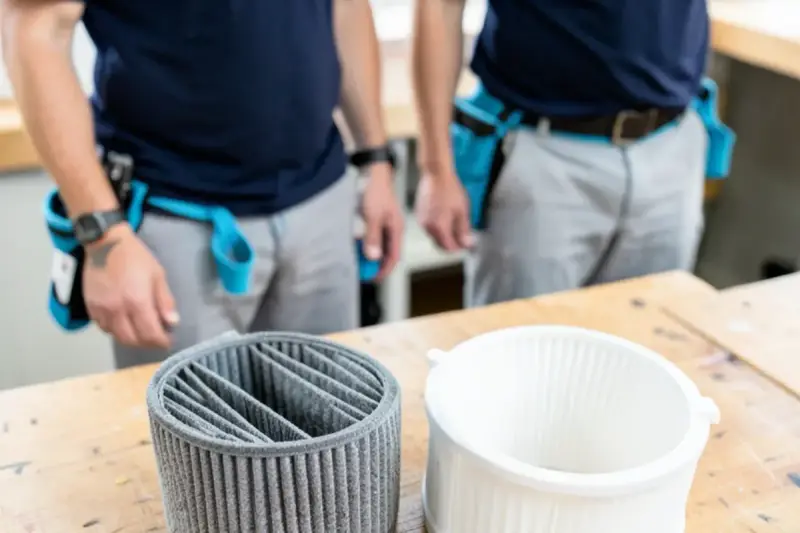
Pets move you to the short end of the range. Carrier says to check the filter every 30 days with multiple pets, and that a single pet can usually follow the standard schedule. Trane says you may want to change it every 30 days if you have pets.
A practical version:
- One pet, short hair. Stay with the standard schedule, but look every month.
- One heavy shedder. Expect to change a 1-inch filter closer to every 30 to 60 days.
- Two or more pets. Check every 30 days, and change it when the pleats look coated.
- Any pets with a 4-inch filter. Use the 6-month mark as your outer limit and check it at three.
These adjustments are our own judgment, built from the ranges above. Your filter will tell you if they are right.

Does Charleston humidity change the interval?
Not by any published number. Neither Carrier nor Trane gives a humidity adjustment, so treat this as field judgment and not a rule.
What matters here is run time. Carrier says continuous operation means replacing the filter more often than the standard recommendation, and our system load is heavy. Charleston International Airport averages 64.3 days a year at or above 90°F, per NOAA normals. More hours on the blower means more air through the filter, so it loads up sooner.
So we suggest a seasonal schedule. From June through September, plan to check it every month and expect the short end of the range. In mild spring and fall weeks, when the system barely runs, the same filter can go longer. Pollen season is the exception. Trane suggests changing disposable filters more often then.
Damp air adds one more reason to look. A filter sitting in a wet return or closet can go musty long before it looks full. If a filter feels damp, read the FAQ below.
Does new construction on Johns Island mean more changes?
Yes, if it is close by. Johns Island has plenty of new building, and Carrier lists nearby construction among the conditions that call for a change at least once every 30 days. Dust from grading and framing goes straight into your return.
The same goes for your own project. Drywall dust, floor sanding and paint work all load a filter quickly. Change it before the work and again when the work ends. Check it every couple of weeks in between.
If you moved into a brand-new home, look at the first filter sooner than you think. Construction dust often shows up there in the first months.

Can a filter be too fine for your system?
Yes. MERV is the rating for how small a particle a filter catches. Higher numbers catch more, but they also resist airflow. Trane says most HVAC systems can use MERV 8 to 13, and that as the rating climbs, the added resistance may affect system performance.
Do not grab the highest number on the shelf. A tight 1-inch filter on a small return can starve a system of air. If you want finer filtration, a thicker media cabinet or a whole-home air filtration option gives the air more surface to pass through. Ask for an airflow check after any change.
Which MERV rating suits which home?
For most homes here, a mid-range pleated filter is the sensible starting point. This table is our own general guide and not a manufacturer rule, so check your equipment manual first.
| MERV range | Typical filter | Suits | Watch out for |
|---|---|---|---|
| 1 to 4 | Thin fiberglass | Basic equipment protection | Lets most fine dust through |
| 6 to 8 | Standard pleated | Most homes with a normal return | Check it monthly in summer |
| 9 to 12 | Better pleated | Pets, pollen and construction dust | Can restrict a small return |
| 13 and up | High-efficiency media | Systems designed or checked for it | Have static pressure tested first |
Watch how the system behaves after you move up a grade. A whistling return, weak airflow or an iced coil means the filter may be too tight for that slot.
Fit counts for more than the number on the label. A filter that leaves a gap at the frame lets air around it, so a modest filter that seals well will outperform a fine one that does not, and adding foam tape to a loose slot is a cheap fix to try.
What does a clogged filter really cost you?
More than the filter. DOE's Energy Saver guide says routine filter cleaning or replacement can cut an air conditioner's energy use by 5 to 15 percent. A dirty filter also starves the blower, and that can freeze the coil in summer or trip the limit switch in winter.
It hurts the coil too. Air that slips past a loose filter carries dust straight onto the wet evaporator, where it sticks. That layer is hard to remove and adds to the cost of a later cleaning.
Do you have more than one filter?
Plenty of homes do, and it is an easy thing to miss. Larger houses can have two returns, and two-system homes have at least one filter for each system. A filter at a wall grille and another at the air handler is usually a mistake, since stacking them restricts airflow.
Walk the house once with a flashlight and note every return grille. Mini splits are different again, with a washable screen in every indoor head, so check each one on the same monthly date. Washable furnace filters exist too. They save on purchases, but they must be fully dry before going back in, because a damp filter feeds mold.
How do you change an HVAC filter?
It takes about five minutes.
- Turn the system off at the thermostat.
- Find the filter. It sits in a wall or ceiling return, or in a slot at the air handler or furnace.
- Write down the size printed on the frame.
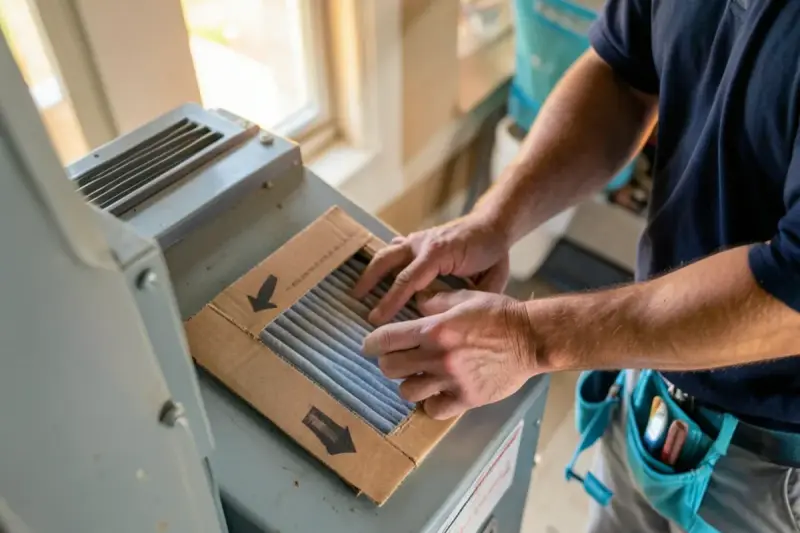
- Slide the old filter out, and note which way the arrow pointed.
- Slide the new one in with the arrow pointing toward the blower.
- Close the cover fully, then turn the system back on.
- Write the date on the frame.
Our filter habit for busy households
Tie the check to something you already do, such as paying a monthly bill. Buy filters by the case, so a spare is always in the closet. That one step does more than any reminder app.
Then stop counting days and look. Hold the filter up to a light. If you cannot see light through the pleats, change it, even if the calendar says you have time.
Tell us when a filter clogs much faster than it used to. That can point to leaky return ducts pulling attic or crawl space dust into the system, and no filter schedule fixes that. Our guide to why homes stay humid with the AC on covers the same leaks from another angle.
Aero Air Techs is based in Charleston and serves Johns Island and the surrounding areas. A yearly AC tune-up includes a look at the filter setup and airflow, and we quote before work begins.
Related questions
What happens if I never change the filter?
Airflow drops and the system works harder. ENERGY STAR warns that a dirty filter can raise energy costs and damage equipment, leading to early failure. A blocked filter can also freeze the indoor coil in cooling, or overheat a furnace and shut it off. Those are avoidable service calls during a long Johns Island summer.
Are washable filters worth it?
They can work if you actually wash them and let them dry completely before going back in. A damp filter in a warm closet is not what you want, especially in our humid climate. Check that the filter's rating suits your system. Mini splits have washable filters of their own, so follow the owner's manual for those.
What if the filter is wet when I pull it out?
Do not just swap it and move on. A wet filter usually points to a blocked condensate drain, a frozen coil or water getting into the return. Turn the system off if you see water around the unit, then call. ENERGY STAR notes a plugged drain can cause water damage, so it is worth a look.
Sources
Services this guide relates to

Air Purifiers and Filtration
Filters and whole-home air cleaners matched to your blower, with realistic expectations.
AC Maintenance
Coil rinse, drain care and electrical checks before the long cooling season.

Whole Home Dehumidifiers
Humidity control for sticky Lowcountry homes, after the AC and ducts are checked.