Preventive HVAC Maintenance Checklist for Property Managers
Name every unit, give each one an interval and keep the record. That is most of a good maintenance program, and the rest is follow-through.
- 4.9★ on Google (16 reviews)
- Open 24 hours, 7 days
- Clear, upfront quotes
By the Aero Air Techs team. Published October 30, 2026, updated October 31, 2026.
A commercial HVAC maintenance checklist works when it names every unit, sets an interval for each one and leaves a written record. For most property managers that means a filter and drain walk every month, a technician visit each quarter, and full cooling and heating checks every spring and fall.
Start there, then tighten the schedule wherever a unit keeps causing calls. The checklist below is built for managers of offices, retail strips, churches and small rental portfolios around Charleston, where the cooling season is long and the humidity never really leaves.
Start with an equipment list, not a calendar
You cannot maintain what you have not counted. ASHRAE describes Standard 180 as a standard practice for inspecting and maintaining commercial HVAC systems in new and existing buildings, and the working idea behind it is simple: inventory the equipment, then set a frequency for each piece. Check which edition is current before you quote it in a contract.
Build one line per unit with these fields:
- Unit tag and location, such as RTU-2 over Suite 104
- Make, model, serial number and age from the data plate
- Refrigerant type
- Filter size and quantity
- Which tenant or space it serves
- How to reach it: roof hatch, ladder, key holder
- Who pays for what under the lease
Commercial HVAC maintenance checklist by interval
Use this as a starting schedule. ASHRAE's preventive maintenance checklist for facility operators maps Standard 180 work to ranges: filters monthly to quarterly, drain pans monthly to semi-annually, and coils and fans quarterly to annually. The tasks below sit inside that thinking, adjusted for a hot, wet coast.
| When | Tasks | What it catches |
|---|---|---|
| Monthly | Check filters, look at drain pans and traps, confirm thermostat schedules, read the tenant complaint log | Dirty filters, blocked drains, overrides left on |
| Quarterly | Change filters as needed, inspect belts and fans, stroke dampers and economizers, tighten and test electrical parts | Slipping belts, stuck dampers, failing contactors |
| Spring | Rinse condenser coils, record refrigerant readings, flush condensate lines, test cooling on every unit | Weak performance before the long hot stretch |
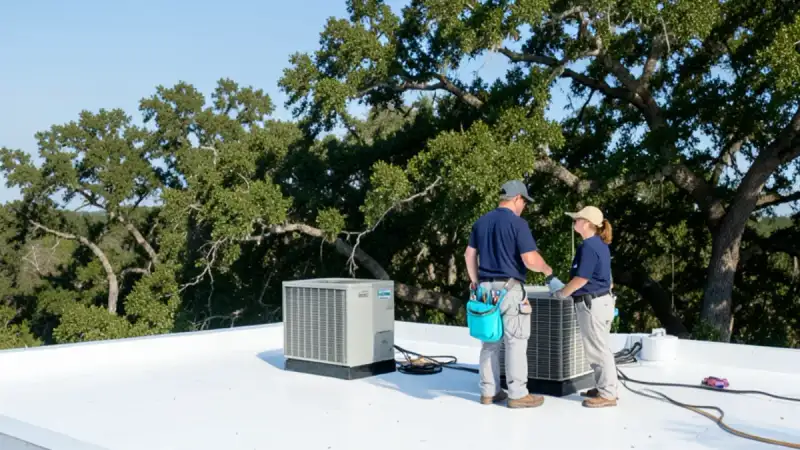
| Early summer | Roof walk for loose panels, screws and debris before storm season peaks | Parts that become projectiles in high wind |
| Fall | Test heating, inspect gas heat sections and flues, check electric heat strips, confirm carbon monoxide alarms | Heat faults before the first cold tenant call |
| Annually | Deep clean coils, check sensors and controls, review the repair history, update replacement plans | Slow decline and repeat failures |
What does the Lowcountry add to a standard list?
Three things: water, salt and storms.
Water. NOAA's 1991-2020 normals put Charleston International Airport at 64.3 days a year at or above 90°F, so coils pull moisture out of the air for months on end. All of it has to leave through a drain. ASHRAE's checklist treats 30% to 60% relative humidity as a typical design range and tells operators to investigate persistent readings above 60%. Put a cheap humidity reading on your monthly walk.
Salt. Buildings near the harbor, the marsh or the beach need condenser coils rinsed more often, and fasteners and cabinet panels watched for rust. Our coastal corrosion AC repair page shows what that damage looks like.
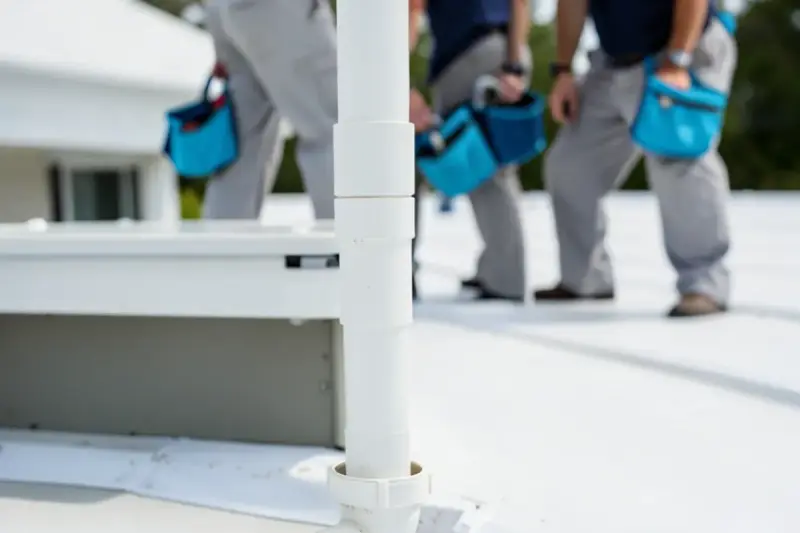
Storms. NOAA dates hurricane season from June 1 to November 30. Check that access panels are fastened, condensate lines are secure and nothing loose sits on the roof before the season's busiest weeks. After any big wind, look before you restart a unit with a dented cabinet or a wet electrical section.
Which tasks can your own staff handle?
Split the list by risk. Staff can cover the observation work, and that alone prevents plenty of service calls.
Good staff tasks
- Log complaints with the date, room and time of day
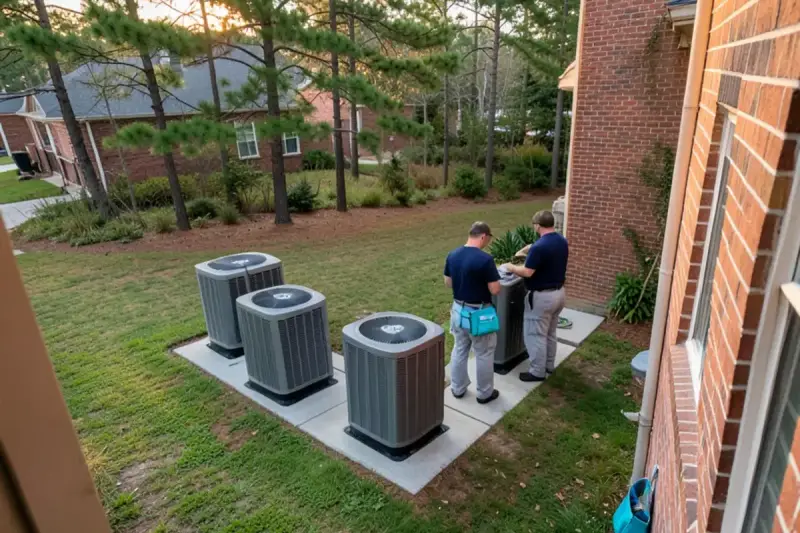
- Keep the space around ground units clear, to the distance the manual asks for
- Change filters where access is safe and the size is on the list
- Check that thermostats match the posted schedule
Leave these to a technician
- Refrigerant work. EPA Section 608 requires technicians who handle refrigerant to be certified, so ask any vendor about this directly.
- Electrical testing inside a unit
- Gas heat sections, flues and combustion checks
- Chemical coil cleaning
- Any roof work your insurance or safety policy does not cover for staff
Why one schedule fails across a mixed portfolio
Equipment in the same zip code can sit at very different points in its life. A rental portfolio in Hanahan makes the point. Older brick ranch houses there may have ductwork that has outlived several systems, while first-phase homes in Tanner Plantation could be running original equipment after more than 20 years. Those two properties need different plans, even with the same owner and the same calendar.
A system old enough to use R-22 needs a note on your list as well, because that refrigerant is no longer produced or imported in the US. A leak on one of those units is a capital decision and not a routine repair. Flag it now, while you still have time to budget.
Keep records your next manager could use
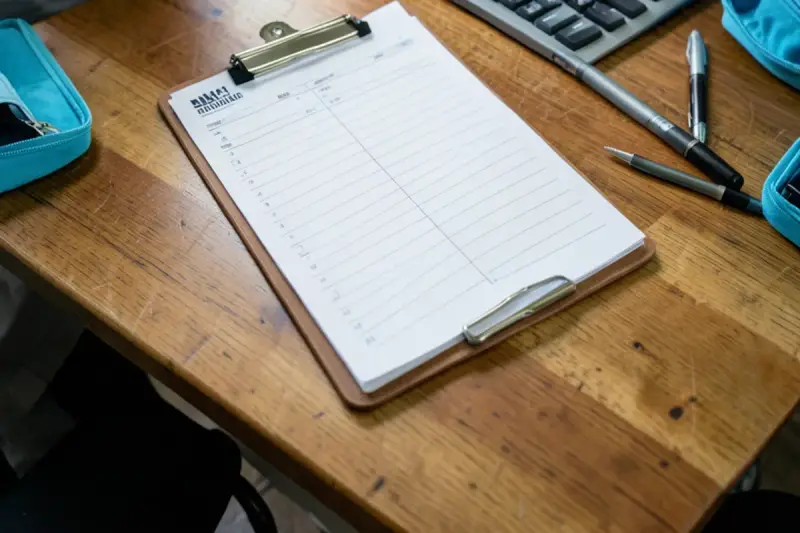
A log earns its keep twice. It proves the work happened, and it shows you which unit is eating the budget. ASHRAE's checklist asks operators to record the date, the initials of the person who did the task, and a status of pass, fail, not applicable or deferred. Copy that format. It takes seconds per unit.
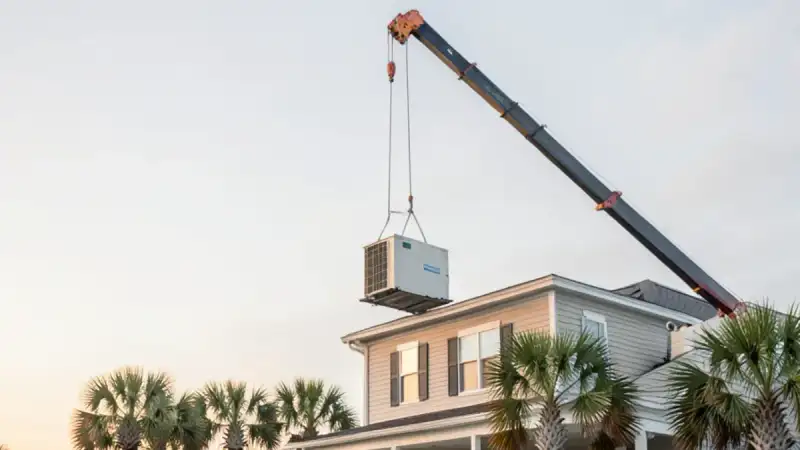
Add photos of anything failed, plus the invoice number for every repair. After a year, sort by unit. Whatever sits at the top of the repair list is your next conversation about replacement, and our rooftop unit replacement guide covers how to plan that job.
How do you budget for maintenance across a portfolio?
Group the spending into three buckets, so an owner can see what is routine and what is coming.
- Routine visits. Scheduled checks, filters and belts, priced by unit and by visit.
- Expected repairs. Small parts that wear out. Use your own past invoices to set a yearly allowance per unit.
- Planned replacement. Units nearing the end of their life, listed by year so a large bill never arrives as a surprise.
Sort every unit by age and condition once a year. A one-page list marked keep, watch or replace gives owners a clear view of the next five years, and it makes a capital request far easier to defend. Our rooftop unit replacement planning guide covers that step for larger units.
How do you handle tenants during a visit?
Notice prevents most complaints. Check the lease for how much notice you owe, then tell tenants what will happen, when and how long the system will be off.
- Send the date early. Give a window and a contact name.
- Clear the path. Ask tenants to move stock or furniture away from closets and access doors.
- Plan around trading hours. A restaurant or shop may need work before opening or after closing.
- Report back. A short note after the visit shows tenants the issue they raised was checked.
Which metrics tell you the program is working?
Track a few simple numbers each quarter. Count the emergency calls per unit, since those should fall as planned visits catch faults. Note how many planned tasks were completed on schedule, and how long repairs waited for approval. Then watch energy use per building over the same months a year earlier, adjusted by eye for an unusually hot summer. If emergency calls hold steady after a year of visits, look at who does the work and what the checklist really covers.
What we tell property managers before they sign a scope
Write down the boring parts. Most disputes start with a one-word scope that left the reader to guess.
Before you sign with any vendor, get these answers on paper: which units are covered, how many visits a year, who buys filters and in what size, what the report looks like, and what happens after hours. Ask for a sample report, because it tells you more than the sales sheet does.
Keep the roof walk on the list even when a unit seems fine. Most of the expensive failures we would want to catch early give a small warning first: a wet pan, a chirping belt, a rust line at a panel seam.
We work on commercial HVAC maintenance and commercial HVAC repair for homes and small businesses, based in Charleston and open 24 hours, 7 days a week. Tell us your unit count and we will talk through a scope, with a clear, upfront quote before work begins. Ask what a recurring visit would include at your property, since it depends on the equipment.
“We have used Rodriquez Washington and the company several times and he does an awesome job! He is honest and takes his time with us. We will continue to use him at Abyssinia Baptist Church.”
“Chris came out to check out my ac unit And found the problem in 5 min and fixed It now I'm back cool, price was affordable He's my guy from now on, Thanks Chris”
4.9 out of 5 from 16 Google reviews (checked October 2026). Read more reviews · Leave a review
Related questions
How often should a commercial building get HVAC service?
Set the interval by unit, not by building. ASHRAE's checklist for facility operators uses monthly walk-throughs with quarterly, semi-annual and annual tasks on top. A hard-working unit serving a restaurant or a dusty tenant usually needs more attention than one serving a small quiet office in Hanahan, so tighten the schedule wherever problems repeat.
Is ASHRAE Standard 180 required for my building?
Treat it as a reference unless a document says otherwise. ASHRAE describes Standard 180 as a practice for inspecting and maintaining commercial HVAC systems. Whether it binds your building depends on your contracts, your insurer and local rules, so check with your attorney or the local building department before you promise tenants anything about it.
Who pays for filters, the owner or the tenant?
Your lease decides, so read it first. Many commercial leases spell out who maintains HVAC equipment, and some split routine service from major repairs. If the wording is vague, get it clarified in writing before the first failure. Then put the answer on your unit list so the person changing filters knows exactly which units are theirs.
Sources
Services this guide relates to
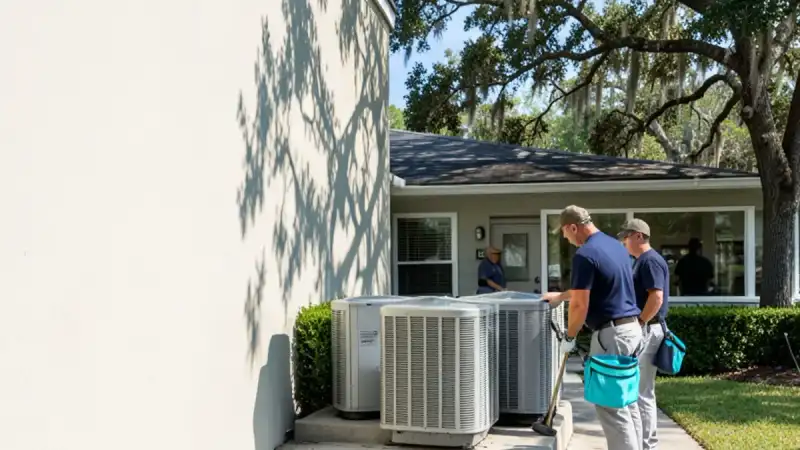
Commercial HVAC Maintenance
Planned visits for filters, coils, belts and drains, with a report for each unit.
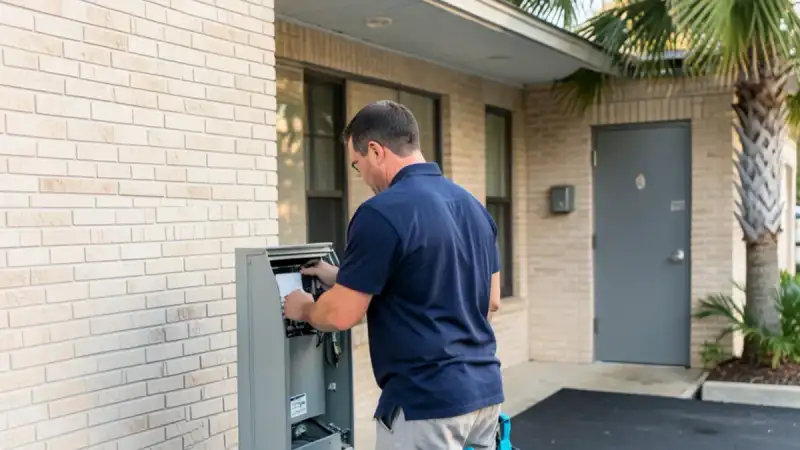
Commercial HVAC Repair
Diagnosis and repair for offices, shops, restaurants, churches and small multi-tenant buildings.
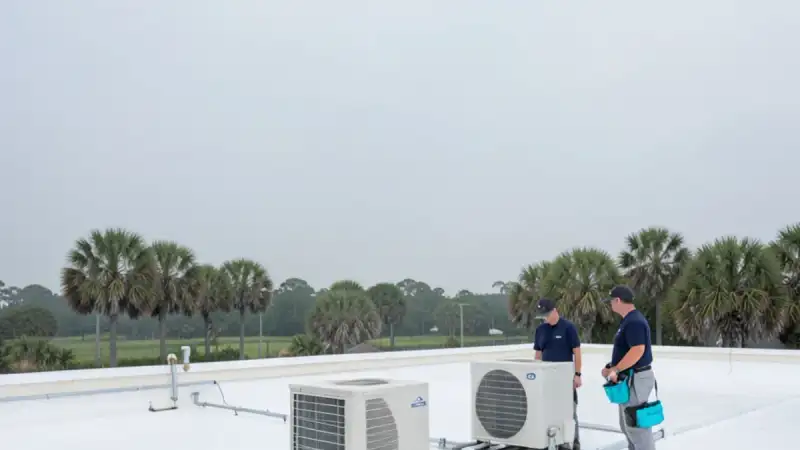
Rooftop Unit Service
Repair and upkeep for rooftop package units, with records an owner can keep.