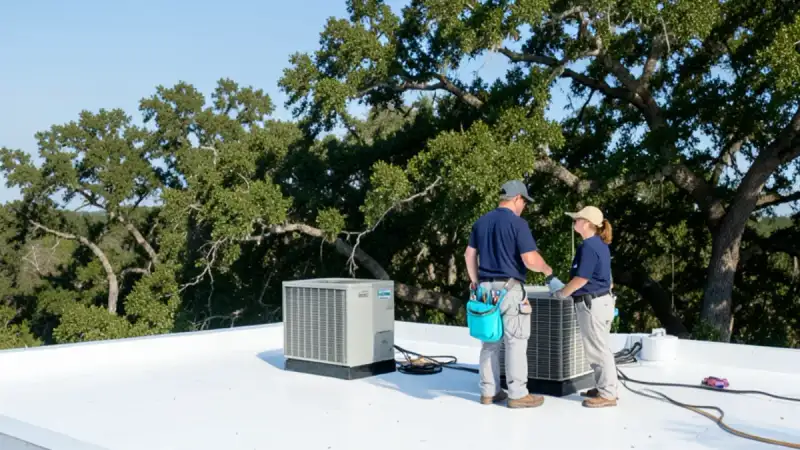
Rooftop Unit Replacement: Planning Guide for Building Owners
The unit is the easy part. Curb fit, the crane, your tenants and the permit decide whether replacement day goes well.
- 4.9★ on Google (16 reviews)
- Open 24 hours, 7 days
- Clear, upfront quotes
By the Aero Air Techs team. Published October 30, 2026, updated October 31, 2026.
Rooftop unit replacement goes well when four things are settled before anyone orders equipment: the curb, the crane, the tenants and the permit. Plan in that order. The unit itself is usually the simplest part of the job. This guide is for owners and managers of small commercial buildings around Charleston.
There are no prices here on purpose. Roof access, curb fit and electrical work change every job, so a number on a web page would only mislead you.
Rooftop unit replacement starts with a roof survey
Get someone on the roof before you compare models. A model number off the old data plate tells you what is there, but it does not tell you what will fit.
A useful survey records:
- Data plate details: tonnage, voltage, phase, heat type and age
- Curb size, height, condition and flashing
- Supply and return locations inside the curb
- Electrical disconnect, breaker size and wire condition
- Gas line size and routing, if the unit has gas heat
- Condensate drain location and how water leaves the roof
- Economizer, thermostat and any building controls
- Roof age, plus whether a roofing warranty applies
- Where a crane could stand and what is overhead
Will the new unit fit the old curb?
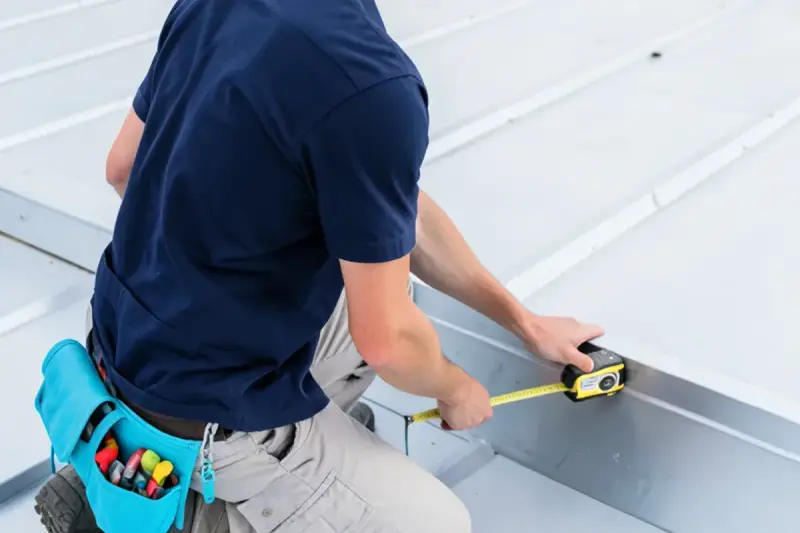
Plan on a curb adapter until a measurement proves otherwise. A curb is the raised frame that carries the unit and seals it to the roof. SMACNews, published by the sheet metal trade group SMACNA, reported in 2022 that replacing a rooftop unit usually calls for an adapter to bridge the existing curb and the new footprint. The same article describes a contractor building custom curbs for a standing seam roof by tracing the seam pattern.
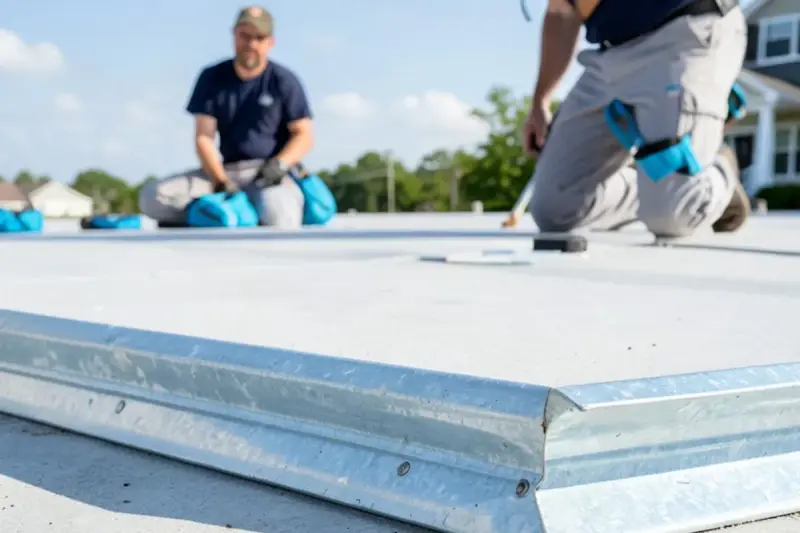
An adapter choice settles several questions at once:
- Height. Does the unit still clear the drip line and service space?
- Duct alignment. Do supply and return meet without a choke point?
- Weight. The new unit plus the adapter may outweigh the old one, so ask whether a structural review is needed.
- Sealing. Gaskets and flashing keep the building dry, and a leak here shows up in a tenant's ceiling.
- Roof terms. Tell your roofer before anyone cuts or adds flashing.
Sequence matters too. One manufacturer's adapter curb instructions warn that an adapter not seated correctly could collapse under the unit's weight, and they tell people to stay clear of the curb during placement. Read the instructions for the exact adapter on your job.
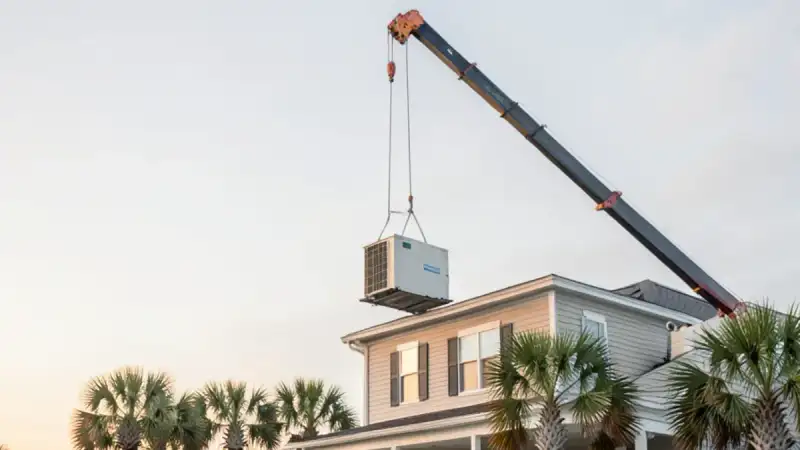
What happens on crane day?
Crane day works when everyone knows their part the week before. Most of the risk sits in the setup, and the actual lift is usually the short part. OSHA's cranes and derricks standard, 29 CFR 1926 Subpart CC, applies to cranes used in construction work, and its FAQ notes that a competent person must inspect ground conditions each shift. Ask the crane company how it meets those rules on your site.
| Item | Who usually handles it | What to confirm |
|---|---|---|
| Lift plan | Crane company with the contractor | Unit weights, reach, pick points |
| Crane position | Crane company | Ground support, overhead lines, access |
| Street or parking closure | Contractor with the local authority | Whether a right-of-way permit applies |
| Old unit removal | HVAC crew | Refrigerant recovered, power and gas off |
| Rigging and signals | Crane crew | One named signal person |
| Ground safety | Everyone | Cleared zone below the lift |
| Weather call | Crane operator | Wind limits, with a backup date |
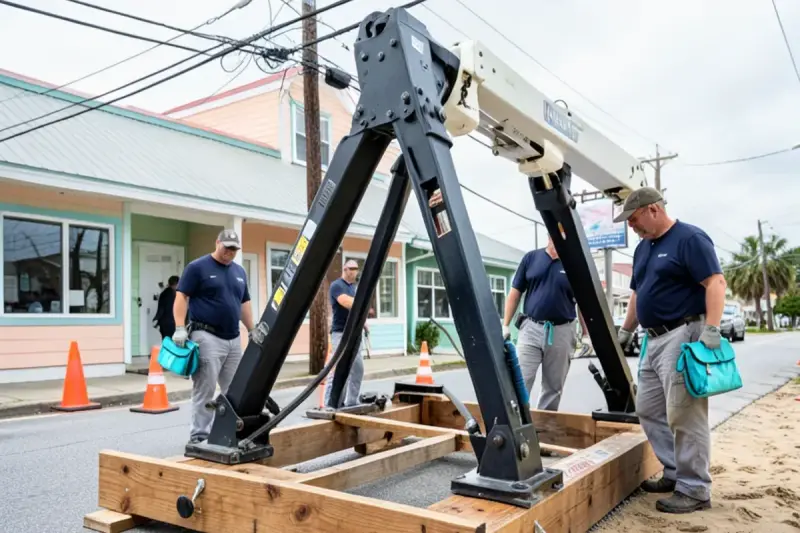
On Folly Beach, plan around the place itself. Folly Road is the main way on and off the island, so a delivery stuck in beach traffic can burn the crane window. Sandy shoulders may need mats or pads under outriggers. An early start on a weekday outside the summer rush is often the easier lift, but confirm any street work with the city.
How do you schedule around tenants?
Tell tenants early, in writing, and give them a date with a backup. Their concerns are usually simple: when the air goes off, how long it stays off, and whether anyone will be in their space.
Your notice should cover:
- Date, start time and rain or wind backup date
- Which suites lose cooling or heat, and for how long
- Parking, dumpster or entrance changes
- Roof noise and any odors from roofing work
- A phone contact on the day
Group the work by tenant risk. A restaurant, a medical office and a server closet each lose more from a long outage than a storage suite does, so ask them first which hours hurt least. Some lifts work better before opening or on a closed day.
Equipment dates matter as much as tenant dates. SMACNews described a school job where long lead times delayed the project until Christmas break, when a crew of four finished in 10 days. Do not promise tenants a date until the equipment delivery is confirmed.
Season matters here as well. Spring and fall are the easier windows for a swap in Charleston, but hurricane season runs June 1 to November 30 according to NOAA, so keep a backup date in that stretch.
Which permits and rules apply?
Ask the jurisdiction where the building sits, because each town and county runs its own process. A few local starting points:
- Folly Beach. The city's building forms and permits page lists its permit contacts and inspection requests. We could not find a published rule on commercial HVAC swaps there, so ask the building department directly.
- City of Charleston. The Permit Center takes the mechanical trade permit application, Form 5.1. Ask how a rooftop swap is handled, because sources conflict on same-size exemptions.
- Historic districts. The City of Charleston's Board of Architectural Review guidelines say HVAC units must not be visible from the public right-of-way, which can matter if a new unit is taller than the old one.
- Licensing. The SC Contractor's Licensing Board oversees commercial mechanical work. Ask every bidder for a license number and look it up on the LLR lookup.
Get it in writing who applies for the permit and who calls for inspection.
What should a coastal roof change in your spec?
Buy for the air the unit will breathe. A roof near the ocean gets salt on every onshore breeze, and a unit that lasts inland can fade faster there.
Ask each bidder about coil protection options, corrosion-resistant fasteners and how the unit will be anchored to the curb for wind. Your building official or engineer has the last word on anchorage. Our rooftop unit service page covers the upkeep side, and a coil rinse schedule belongs in the plan from day one.
How far ahead should you plan a rooftop replacement?
Start before the unit fails. A planned swap gives you time for a survey, a crane date and notice to tenants, while an emergency change gives you whatever equipment is on hand.
- List every unit by age and condition. Mark those likely to need replacing in the next two or three years.
- Budget early. Roof work, curb adapters and electrical changes can add to the unit price.
- Pick a shoulder season. Spring and fall leave you room if a delivery slips, with no July heat in the tenant spaces.
- Order with lead time in mind. Larger or coated units may not be sitting on a shelf.
- Line up the roofer. Ask how curb work affects any roof warranty before the crane is booked.
Keep the old unit's nameplate photos and airflow records. They help the next engineer size the replacement without guessing.
What we tell owners before they approve a rooftop job
Pay attention to the survey, not just the model number. Most of the bad days we can picture on a roof come from a curb nobody measured or a disconnect nobody checked.
Three more points. Ask for a line-itemed quote that separates the unit, adapter, crane, electrical and roofing work, so you can compare bids fairly. Ask what start-up testing is included: airflow, economizer action, drain trap, safety controls and a written record of readings. And line up the handoff to maintenance now, so the first filter change does not get forgotten.
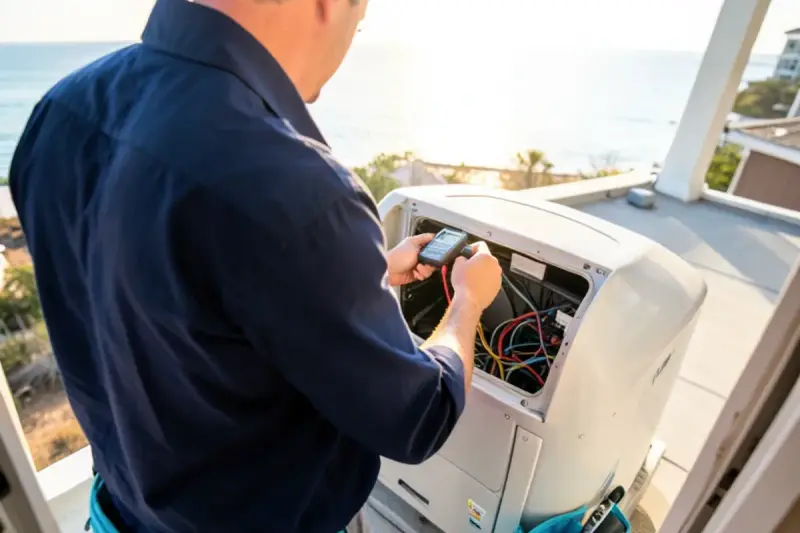
We work with homes and small businesses, based in Charleston and serving the surrounding areas. Send us the data plate details and the address, and we will tell you what we would want to look at. You will get a clear, upfront quote before work begins. If a job calls for a structural engineer or a roofer, we will say so.
Related questions
Can a new rooftop unit sit on my old curb?
Sometimes, but do not assume it. Some replacements land on the existing curb, and many need an adapter because the new unit's footprint or duct openings differ. Have the curb measured and the replacement model's curb data checked before the order goes in. On an older Folly Beach roof, also look at the curb's condition, since salt may have shortened its life.
Do I have to replace every rooftop unit at once?
No, but look at the lift before you decide. Replacing units in phases spreads out the disruption and the capital spend. Grouping units can reduce the number of crane days and the tenant notices that come with them. Your repair log should drive the order, so start with whichever unit has the worst history and the biggest tenant risk.
How far ahead should I start planning?
Start before the unit fails, because an emergency removes your options. Lead times, permit review and crane booking all vary, so get real dates for each one from the people providing them. Avoid planning around peak summer in the Charleston area if you can, because a failed swap in July leaves tenants with no cooling at the worst time.
Sources
- SMACNA, HVAC replacing rooftop units, SMACNews, November-December 2022
- Manufacturer installation guide for a roof curb adapter, 2020
- OSHA, 29 CFR 1926.1400, scope of the cranes and derricks standard
- OSHA, cranes and derricks in construction, frequently asked questions
- City of Folly Beach, building forms, permits and inspections
- City of Charleston Board of Architectural Review, General Guidelines, March 2024
- SC LLR license lookup
Services this guide relates to
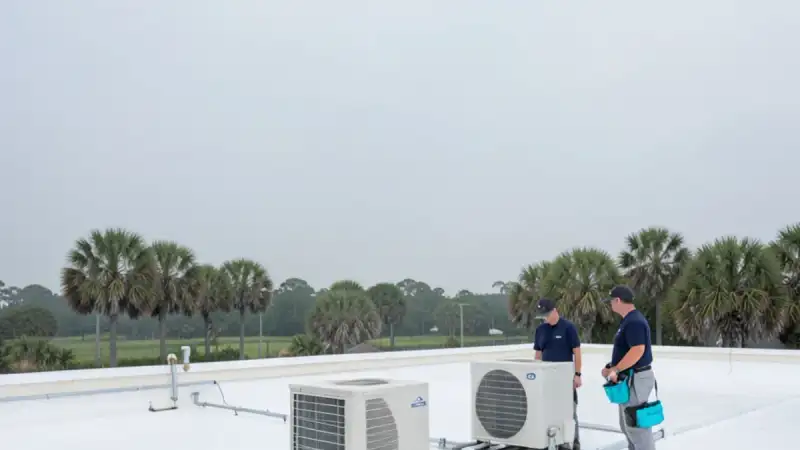
Rooftop Unit Service
Repair and upkeep for rooftop package units, with records an owner can keep.
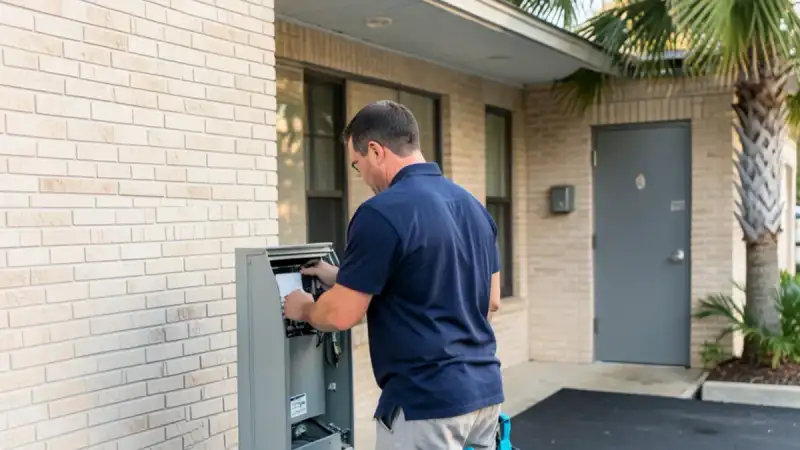
Commercial HVAC Repair
Diagnosis and repair for offices, shops, restaurants, churches and small multi-tenant buildings.
Commercial HVAC Maintenance
Planned visits for filters, coils, belts and drains, with a report for each unit.