Fall Furnace Checklist Before the First Cold Night
Eight homeowner-safe steps for October, a first-run test and a firm line around anything involving gas or combustion.
- 4.9★ on Google (16 reviews)
- Open 24 hours, 7 days
- Clear, upfront quotes
By the Aero Air Techs team. Published October 30, 2026, updated October 31, 2026.
This furnace maintenance checklist takes about 30 minutes and needs no tools: change the filter, clear the closet, test your carbon monoxide alarms, look over the vents and run a test cycle on a mild afternoon. Everything to do with gas, burners or the heat exchanger stays with a technician.
Do it in October and you still have time to fix what you find.
Charleston winters are mild, but occasional freezes happen, and they tend to find the furnace nobody has run since March.
The fall furnace maintenance checklist
Work from the top. If a step looks wrong, stop and call.
- Fit a fresh filter. ENERGY STAR wants filters looked at monthly, and the heating season is a natural reset.
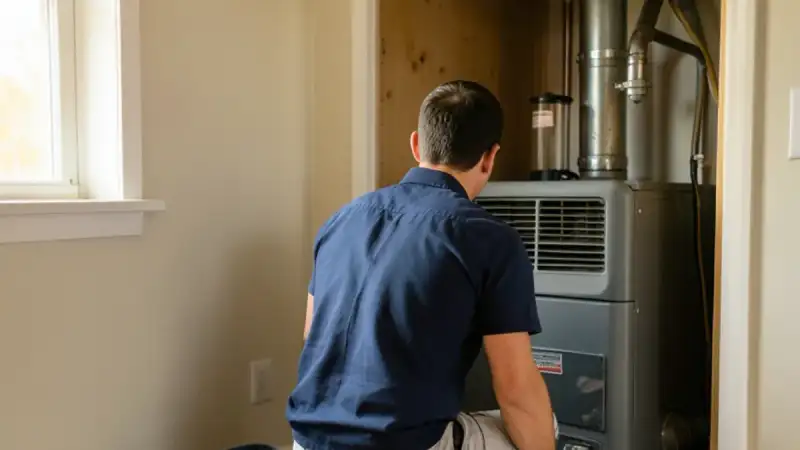
- Clear the closet. Move boxes, paint, cleaners and laundry away from the furnace. Stored items can block airflow, and chemicals do not belong near burners.
- Test your carbon monoxide alarms. CPSC says to test monthly, replace batteries as needed and keep alarms on every level and outside sleeping areas.
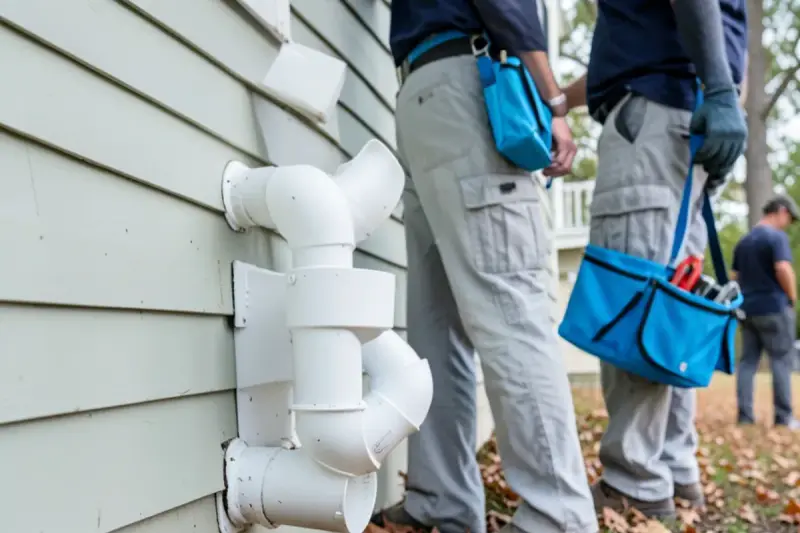
- Look over the vents outside. If your furnace vents through a side wall, make sure leaves, nests and mulch are clear of the pipes.
- Confirm the switch and panel. The furnace power switch should be on, and the door panel should be fully seated.
- Look, but do not touch. Use a flashlight. Note rust streaks, soot, water on the floor or loose vent pipe joints.
- Open the registers. Pull furniture and rugs off the vents and make sure the return grille is clear.
- Run a test cycle. Set the thermostat to Heat, fit fresh batteries and raise it a few degrees above the room.
What should happen during the first run?
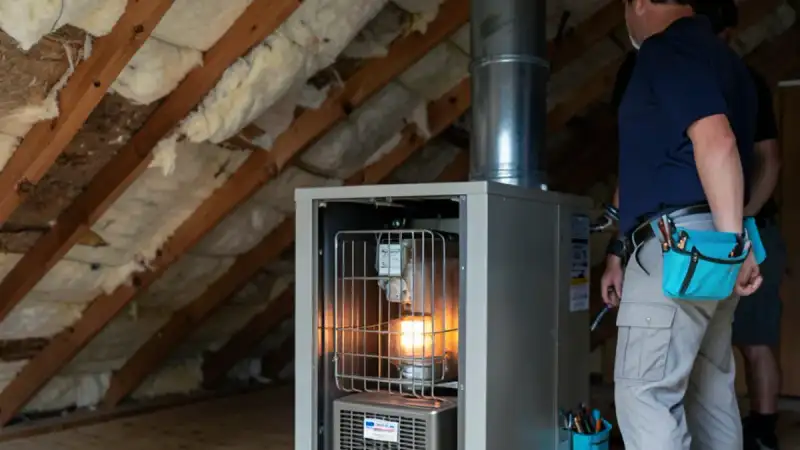
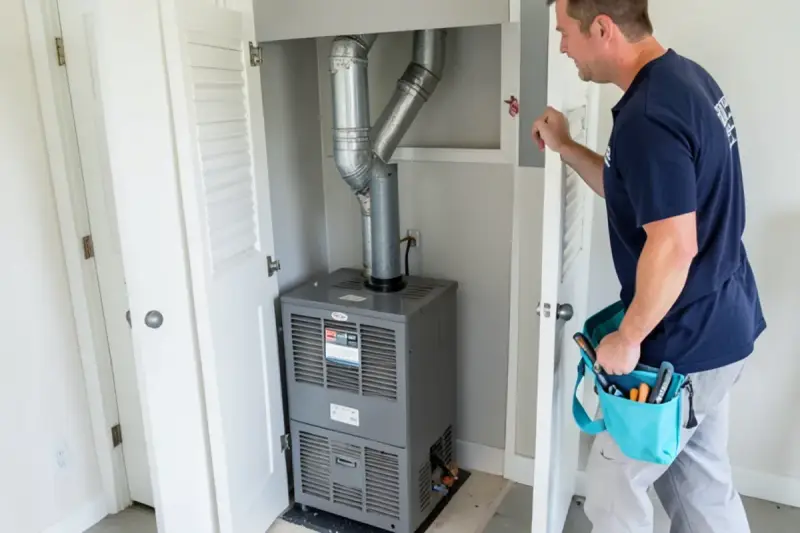
A healthy gas furnace follows a set order, and you can watch it without touching anything. The thermostat calls for heat. A small fan starts. An igniter glows or sparks. The burners light. After a short delay, the main blower pushes warm air to the vents.
| What you notice | What it means | What to do |
|---|---|---|
| Dusty smell for a short while | Season's first burn-off | Open a window, let it fade |
| Warm air within a few minutes | Normal start | Nothing |
| Cool air, then warm | Normal blower timing | Nothing |
| Burners light, then shut off in seconds | Possible flame sensor fault | Call |
| Clicking with no flame | Igniter or gas supply issue | Call |
| Loud bang when lighting | Delayed ignition | Turn it off and call |
| Hot plastic or electrical smell | Possible overheated part | Turn it off and call |
| Gas smell | Possible leak | Leave the house first |
If your furnace blows cold through a full cycle, our guide to a furnace blowing cold air helps you sort out the pattern.
When should you run this list around Charleston?
Sooner than the calendar suggests if you live inland. NWS averages from 1991 to 2020 show how far apart the first freeze falls across a short drive.
| Station | Average first freeze | Run the checklist by |
|---|---|---|
| Summerville 4 W | November 12 | Mid-October |
| Charleston airport | November 27 | Late October |
| Sullivan's Island | November 30 | Early November |
| Downtown Charleston | December 30 | Before Thanksgiving |
Those are averages, so any one year can come early. Pick a mild weekend, since a failed test cycle is a small problem on a 65°F day and a real one in a freeze. If you find trouble on a Saturday in October, you have weeks to sort it out without a cold house.
Which filter should go in for winter?
Use the size printed on the old filter's frame, and match the airflow arrow to the direction marked on the cabinet. Thickness matters. A one-inch filter in a slot made for four will let air slip past it.
Stronger is not always better. A dense filter on a system with a small return can restrict airflow, and a furnace short on air can overheat and shut off on its limit switch. If you moved up a grade and the furnace started cycling off, go back a step and have the return looked at. Pets, pollen and construction dust can all mean a shorter change interval.
How do you know how old your furnace is?
Check the label inside the door. It lists the model and serial number, and most makers code the build date into the serial. Your manufacturer's website or a quick call can decode it.
Write down the age, then use it as a planning tool. An older furnace that runs safely can keep going, so age alone does not condemn it. A cracked heat exchanger does, because a furnace with that fault can leak combustion gases, and a technician should tell you plainly if that is what they found. Ask to see any crack for yourself, by camera or mirror, before you accept that diagnosis. If replacement does come up, read our furnace replacement page so you can compare options in daylight.
Which jobs belong to a technician?
Anything past the filter door. ENERGY STAR lists these as part of a contractor's check, and each has a safety reason behind it.
- Gas connections and gas pressure. Improper connections are a fire hazard.
- Burner combustion. A dirty burner does not burn properly, and combustion needs a test instrument to verify.
- Heat exchanger inspection. Cracks and dirt can make a furnace run less safely.
- Electrical connections and motor readings. Loose connections can cause unsafe operation.
- Moving parts and blower. A motor without proper lubrication uses more power and wears faster.
- Controls and startup sequence. The system should start, run and shut down safely.
Do not remove the burner cover, adjust the gas valve, clean the flame sensor or work on the igniter. A hot surface igniter is brittle and cracks easily, and the gas valve is never a homeowner part. If your furnace needs any of this, book furnace maintenance and ask what was measured.
Did a storm leave water near your furnace?
Check this before you run the first cycle, especially on James Island. Marsh-side lots and low streets can see water, and Atlantic hurricane season runs through November 30, according to NOAA.
Look for a water line on the cabinet, a damp crawl space, rust at the base, wet insulation or debris around the unit. If water has reached the furnace or its gas controls, leave it off. Do not test it to see if it still works. Water can damage controls and valves in ways you cannot see, so have it inspected first.
The same goes for ductwork. Wet duct insulation under a house stays wet, and a soaked run will need attention before the heating season starts.
What if you have a heat pump and not a furnace?
Many area homes do. Take these steps in place of the gas items:
- Change the filter, as above
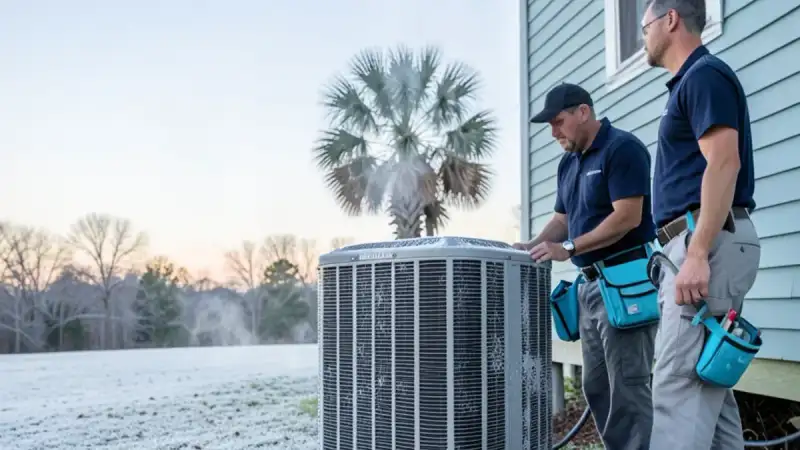
- Clear leaves and pine straw from around the outdoor unit
- Switch to Heat on a mild day and confirm warm air at the vents
- Check that the thermostat does not show emergency heat
- Expect a brief defrost cycle on cold mornings
If the unit iced over last winter, have it looked at now. A heat pump repair in October is far easier to schedule around than one in January. Do not skip the alarm test if you have a gas water heater, a gas range or an attached garage, since those are carbon monoxide sources as well.
What we suggest before the season starts
Treat the alarm test as the most important line on this list. CPSC says never to ignore a carbon monoxide alarm when it sounds: get outside right away and call 911. An alarm is never something to sleep through.
Run the first cycle in daylight. Starting the furnace for the first time on the coldest night means a failure comes at the worst hour, with a house already cooling.
Keep a note with the filter size, the date and anything odd you saw. Take a picture of the furnace label so you have the model and age on hand when you call.
Ask for specifics at any service visit. Which readings were taken? Was the heat exchanger inspected, and how? A good report answers those questions without being pushed.
We work on James Island and the surrounding areas from our Charleston base, and we quote before work begins. If the checklist turns up a fault, our furnace repair page explains how a repair visit runs.
Related questions
When should I do my fall furnace check?
October is a good target around Charleston, before the first cold snap. ENERGY STAR advises checking the heating system in the fall, and an early start gives you time to book a technician if the test run fails. A mild afternoon works well, since you can open a window if the dust smell lingers.
Is a burning smell normal the first time the furnace runs?
A dusty smell for a short while is usually normal, because dust on the heat exchanger burns off. It should fade within a few hours. A smell like hot plastic, melting wire or anything sharp is different. Turn the system off and call. If you smell gas, leave the house first.
Do I need a yearly furnace service in a mild climate?
ENERGY STAR lists a contractor check as an annual item, and a furnace that runs fewer hours can still have a dirty burner, a failing part or a corroded connection. On James Island, a closet, crawl space or garage furnace may also deal with damp air. Short winters do not remove the combustion risk.